

Damage is an unavoidable part of running a vacation rental. Even well-meaning guests can break furniture, lose things, or create wear that goes beyond what you expected.
Although you can’t eliminate this problem entirely, you can lower the risk by putting a few safeguards in place. Alongside adequate insurance and a clearly written rental agreement, refundable security deposits remain one of the most widely used tools for protecting vacation rental properties.
Our guide looks specifically at how security deposits work in practice. It covers what they’re designed to cover, where their limits are, and what to keep in mind when managing them across different booking channels.
What is a vacation rental security deposit?
A vacation rental security deposit is the money you take from a guest to cover potential damage, loss, or excessive cleaning from their stay. If they return the property in good condition, they receive the money back.
Likewise, if there’s damage calling for repairs and replacements, you can deduct these costs before refunding the remaining balance.
Deposits give you a straightforward way to deal with issues after checkout. Instead of having to chase guests after they’ve left or bear the expenses yourself, you already have the money to fall back on. This makes it easier to reduce losses and ensure your properties remain in good condition.
Security deposits vs damage waiver vs insurance
Although they’re often mentioned together, security deposits, damage waivers, and vacation rental insurance serve different purposes.
- A security deposit is a small, refundable amount and is only used if damage occurs.
- A damage waiver is typically a small, non-refundable fee that covers minor incidents without requiring follow-up.
- Insurance covers high-cost damage that goes beyond what a deposit could reasonably absorb.
Many hosts use a combination of all three. Security deposits work well for everyday protection, waivers can reduce friction around small claims, and insurance provides coverage when damage is rare but expensive.
What damage can a security deposit cover?
Not all damage should be treated the same way. Drawing clear lines between different types of damage helps you manage deposits fairly and reduces the likelihood of disputes.
| Covers | Doesn’t cover |
|
|
Some damages may be borderline. For example, a guest might accidentally drop and shatter a glass or leave a towel at the beach.
When deciding whether to use the deposit, weigh the cost of the damage against the potential impact on guest satisfaction. Do you really want to start a dispute over five dollars? Sometimes letting small issues go can pay off more in the long term with fewer negative reviews and more return guests.
Legal requirements for vacation rental deposits
Security deposit rules vary across locations, so it’s important to understand local requirements before implementing a policy.
Refund time frames
Most places specify a time frame for returning security deposits after check-out. This can range from anywhere between seven to 45 days.
While the law may allow longer windows, aim to return the deposit as soon as possible. Late refunds can frustrate guests as they worry about whether you’re planning to keep the money. Quick turnarounds involve more coordination but mean you’re less likely to get some negative feedback.
Communication and transparency
Guests should know about the security deposit and its conditions before their stay begins. Outline your terms in your vacation rental agreement, pre-arrival messaging, and the house rules on your listing page to make sure they understand the process.
Also, provide clear explanations of what you mean by damage, how inspections work, and when you’ll issue refunds. When you set expectations upfront, you’re less likely to spend time dealing with questions or responding to complaints after check-out.
Deposit limits
A security deposit doesn’t set an automatic limit on guest liability. If damage costs exceed the amount, many places allow you to seek the remaining balance from whoever booked the property or involve their insurance provider.
In situations where you’re considering legal action, always seek professional advice. Security deposits are relatively straightforward. Legal claims against guests can be complex and time-consuming, and don’t always end in the host’s favor.
How much should a vacation rental security deposit be?
Setting the right amount depends on various factors. The deposit should be high enough to discourage careless behavior, but not so high that it deters bookings. Equally, your property type, size, and typical guests all affect what you can charge.
Otherwise, there are two ways to decide the amount:
Fixed-rate security deposits
Fixed-rate deposits are the most common approach as they’re more straightforward. They also work well for short stays or single-night reservations, where percentage-based deposits can feel disproportionate.
To give you an idea of the typical amounts, many US hosts charge between $250 and $500 per stay. Larger or higher-end properties may range from $500 to $2,000.
Percentage-based security deposits
Percentage-based deposits typically fall between 10% and 20% of the reservation total. They’re not popular with hosts or guests as they introduce more variability. If you’re using software to manage the process, it’s also harder to automate.
How to collect a vacation rental security deposit
There are multiple ways to collect vacation rental deposits. Just make sure whatever you choose is compliant with local laws and let you pay back the money within acceptable timeframes:
- Cash: Some traditional hosts still rely on cash, but it’s highly impractical. You have to collect the money from guests in person, find a safe space to store it during their stay, and inspect the property before they leave.
- Bank transfer: Transfers guarantee funds in your bank account without requiring you to visit the property. However, they involve manual entry, fees, and delays, making them unpopular with guests.
- Credit card preauthorization: Preauthorizations place a temporary hold on funds without charging the card. They’re easy to automate but usually time-limited, which can be a drawback for longer stays.
- Integrated payment providers: Many hosts today integrate payment processors with Property Management Software (PMS) like Hostfully to automatically charge guests upon booking. You can configure the system to send refunds after inspections or within a certain timeframe, too.
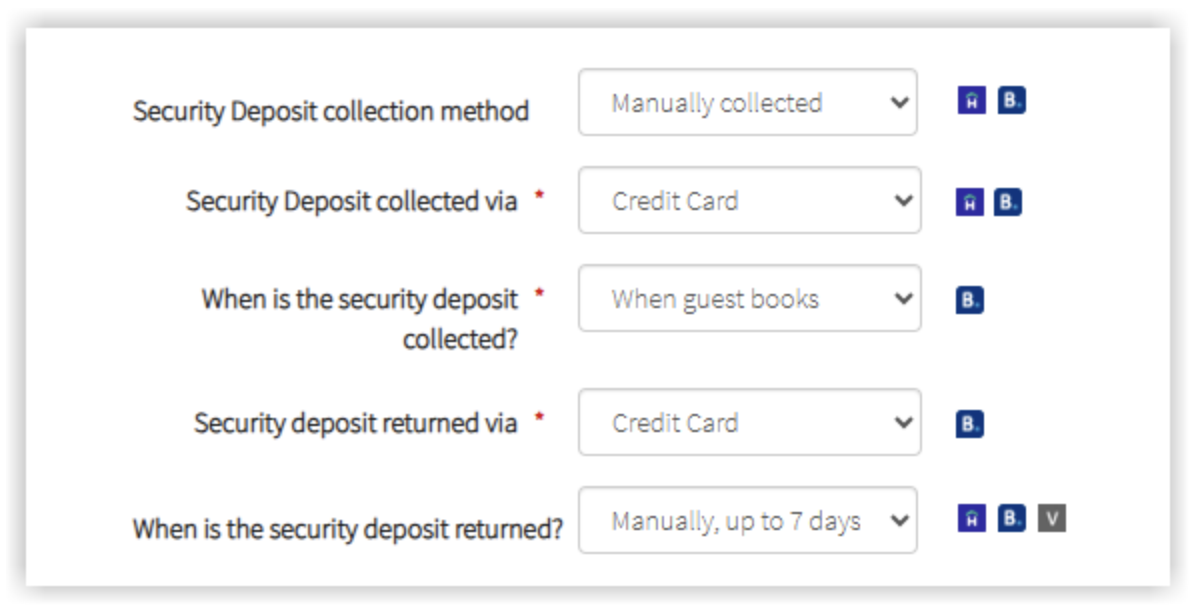
How popular booking platforms handle security deposits
Security deposit handling varies by listing site, which directly affects how much control you have over the process.
| Platform | Deposit scheme | Damage covered | Amount | Timeframe |
| Airbnb | Resolution Center for select cases |
|
Platform decides | N/A
(Airbnb collects the charge after check-out) |
| Vrbo | Host managed deposits |
|
Host decides | 14 days |
| Booking.com | Host managed deposit |
|
Host decides | Host decides |
Losing track of deposits across platforms? PMS like Hostfully connect all your accounts and lets you manage this process from one centralized platform.
Tips for handling vacation rental security deposits
Security deposits are most effective when they’re handled consistently. Here are some tips on how to incorporate them into your processes and communicate them to guests:
Explain the security deposit before guests book
Guests are far less likely to object to a security deposit when they know about it upfront. You should mention it as early in the booking process as possible, whether that’s on the listing page or during checkout.
Clarity matters just as much as timing. Explaining why the deposit exists, what it covers, and when it will be refunded helps guests understand why it’s there. They’ll also be less likely to see it as a sign of your mistrust.
Use a PMS with automated messaging like Hostfully to manage these emails. All you have to do is write a template and set fields and triggers. When someone books your property, the software sends them a message with all the details on your behalf.
Use consistent deposit rules for every guest
Apply the same rules for every guest for consistency. It makes managing security deposits easier because you don’t have to stay on top of all the different rules or keep reconfiguring your system.
Additionally, there’s no risk of guests finding out you charged another person less. Even well-intentioned exceptions can backfire if people notice the difference and feel they’ve been treated unfairly.
Consistency also makes policies easier to explain and defend. When the same rules apply to every booking, there’s less room for argument if you need to make a deduction. This consistency helps build trust over time, particularly with repeat guests.
Be clear about what counts as chargeable damage
Many disputes stem from different opinions about what counts as damage. Guests may assume that small issues fall under wear and tear, while you may see them as damage. Clarifying this from the start helps guests understand what they’re agreeing to and avoids these misunderstandings.
Detailed examples are especially helpful. For example, clarifying that you don’t charge for used linens but do for permanent stains gives guests a clear idea of what’s acceptable.
Consider using a digital guidebook to get into the specifics. Leading solutions like Hostfully let you create a version for every property with text, images, and even video. Send them to guests as a temporary link so they can refer to your policy whenever they need to.
Document the property condition before and after each stay
Take photos of your property before and after every clean with timestamps. This gives you an easy way to prove most types of damages and tie them to specific booking parties.
This evidence becomes especially important if a guest disputes a charge through a booking site. In those situations, you can simply send them the photographs. When you’re not relying on memory or verbal explanations, you’re much more likely to get the deposit and remain in good standing with the platform.
Train cleaning and turnover teams to report damage properly
Cleaning and turnover teams are often the first to spot issues. Make sure they understand what your deposit covers and know exactly what to look for when they visit properties.
Dedicated turnover solutions make this simple by providing you with digital checklists. As well as cleaning tasks, you can tell them what to inspect and ask them to take photographs. This makes it possible to manage damage deposits from afar without losing any control over the process.

Manage security deposits with confidence using Hostfully
Security deposits are most effective when they’re handled consistently from booking through to check-out. When the right systems are in place, they protect your property without creating unnecessary friction for guests.
Hostfully gives you the foundation for that system. Our platform helps you manage security deposits as part of a clear, structured process rather than a series of manual steps.
Here’s what Hostfully gives you:
- Deposit collection and tracking across booking platforms
- Digital rental agreements to collect signatures remotely
- Digital guidebooks to explain your policy to guests
- Centralized guest communication to keep expectations clear
- Task and turnover workflows that support timely inspections
- Integrated payment providers to simplify refunds and record-keeping
Handled well, security deposits don’t have to be a burden — they can support smoother, more predictable business operations.

FAQs about vacation rental deposits
Can I keep a security deposit without proof of damage?
In most cases, you can’t keep a deposit without proof of damage. Guests may dispute your decision and booking platforms and payment providers are more likely to side with them when you lack clear evidence.
How long can I legally hold a security deposit?
The time frame for returning a security deposit depends on local regulations. However, many jurisdictions require you to refund deposits within two weeks to a month after guests check out of your property.
Do guests see security deposits as a red flag?
Guests don’t usually have an issue with security deposits, provided hosts are upfront and implement a fair policy. Deposits have become standard practice in many countries so they tend to feel like a normal part of the stay rather than a sign of mistrust.