


Pet-friendly vacation rentals are no longer a novelty. As more people travel with their furry friends, it has become a meaningful filter on popular booking sites that can influence both visibility and bookings.
But this niche isn’t right for every property. Welcoming pets can increase demand, but it also brings trade-offs that hosts need to take seriously.
Our guide aims to help you decide whether a pet-friendly policy makes sense for your vacation rental. We weigh the pros and cons and discuss how to prepare your business to attract the right guests without causing problems.
Why the demand for pet-friendly vacation rentals is growing
Take a quick look at how many pet-friendly listings you can find on Airbnb. You should find that tourist hotspots like New York, London, and Paris now have thousands of options.
Many of these businesses are reacting to a shift in the way people travel. As remote work has become more common and pet ownership has risen, more travellers have begun searching for rentals that can accommodate their cat or dog. This created a demand for pet-friendly rentals that many hosts couldn’t ignore.
Booking platforms have also responded to this trend. Both Airbnb and Vrbo let users filter search results for pet-friendly places and provide guides on how to find suitable accommodation.
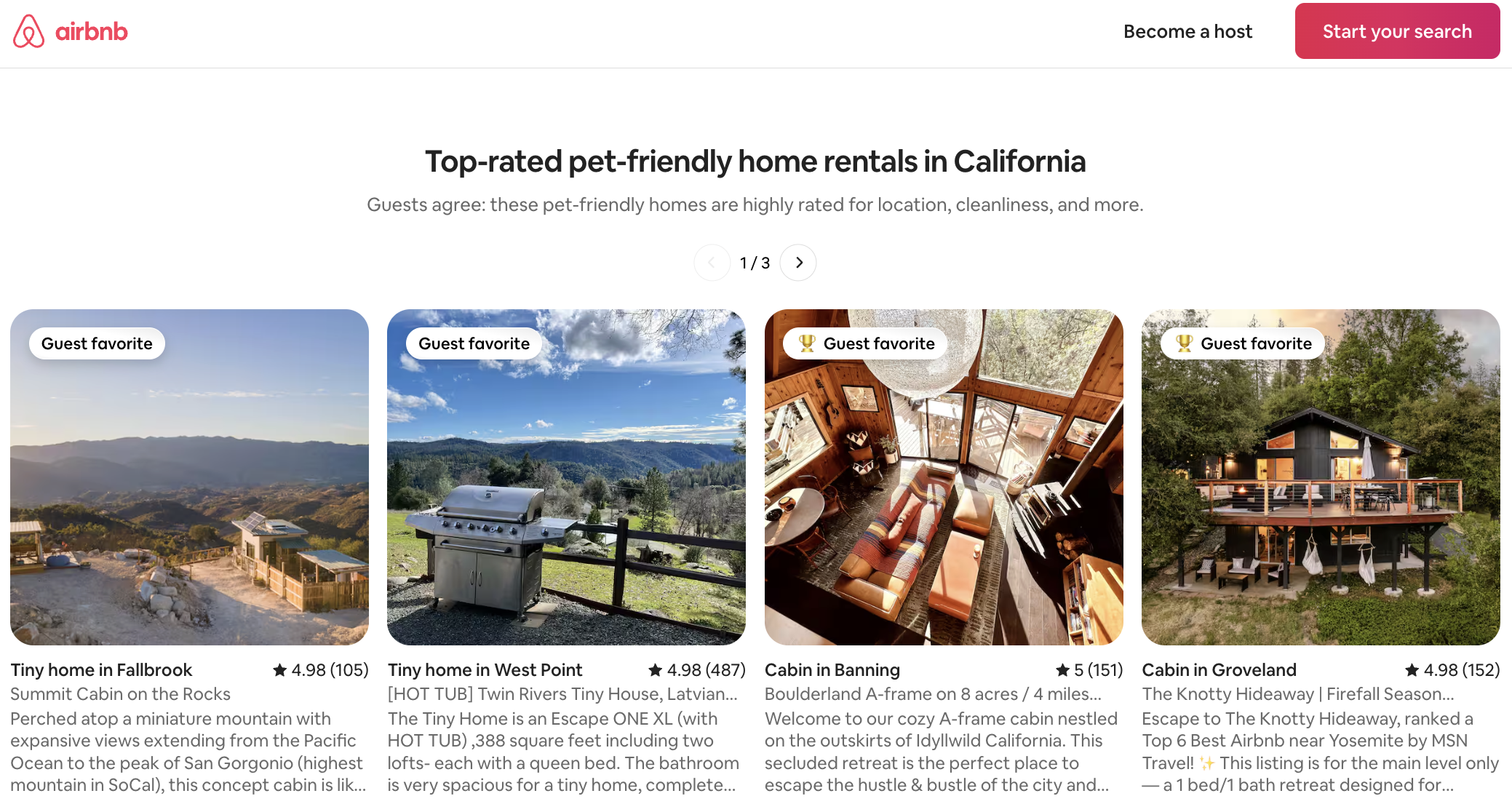
Today, many people won’t even consider a vacation rental unless it welcomes pets and explains what that actually means. That means hosts aren’t just saying they allow animals. They’re using this differentiator to stand out from the competition and market themselves to potential guests.
How to decide if a pet-friendly niche is right for your rental
Before committing to being a pet-friendly rental, it’s worth checking whether you can realistically support this model. The points below aren’t deal-breakers on their own, but they can help you judge fit:
- Property type: Standalone homes, cabins, and ground-floor units tend to handle pets better than apartments in shared buildings. They’re more likely to have easy access to the outdoors — a must for dog owners.
- Location: Barking is less likely to be an issue in the countryside than in dense urban areas. If your rental shares walls with other properties, consider how tolerant neighbors are going to be.
- Typical length of stay: Pet-friendly policies tend to work best for longer trips. If guests only stay for one or two nights, the extra cleaning involved may raise your turnover costs.
- Personal preference: Cats and dogs bring more unpredictability to short-term rental management. If you prefer a hands-off approach or dislike setting firm boundaries, this niche may not be right for you.
Pros and cons of attracting pet-friendly vacation rental bookings
Sure that a pet-friendly policy is right for your business? Understanding the pros and cons can help you see what to expect and prepare for your new target audience more effectively.
Pros of a pet-friendly policy
- Access to a larger pool of guests who actively filter for pet-friendly stays
- Higher likelihood of positive reviews from grateful pet owners
- Clear differentiation in competitive markets where listings otherwise look similar
- Opportunities for cross-promotion with local pet-focused businesses
Cons of a pet-friendly policy
- Higher cleaning and maintenance costs
- Increased wear on floors and furnishings
- Allergy considerations that require stricter cleaning standards
- Greater risk of noise complaints, especially in shared or urban properties
How to set up a pet-friendly vacation rental
Pet-friendly rentals come with extra considerations. It’s not as simple as just selecting a filter on Airbnb or Vrbo and watching the bookings flood in.
Here’s what you need to do to attract the right guests and meet their expectations while setting clear boundaries:
Step 1: Define your pet policy
Start by drafting a clear pet policy that removes ambiguity for guests. You should decide exactly what you’re happy to allow, including:
- Number and type of animals
- Limits on size or breed
- Areas where pets can go
- Whether animals can be left alone
- How to handle waste and clean-up
Vague or overly flexible wording often leads to uncomfortable conversations later, so getting specific works in your favour.
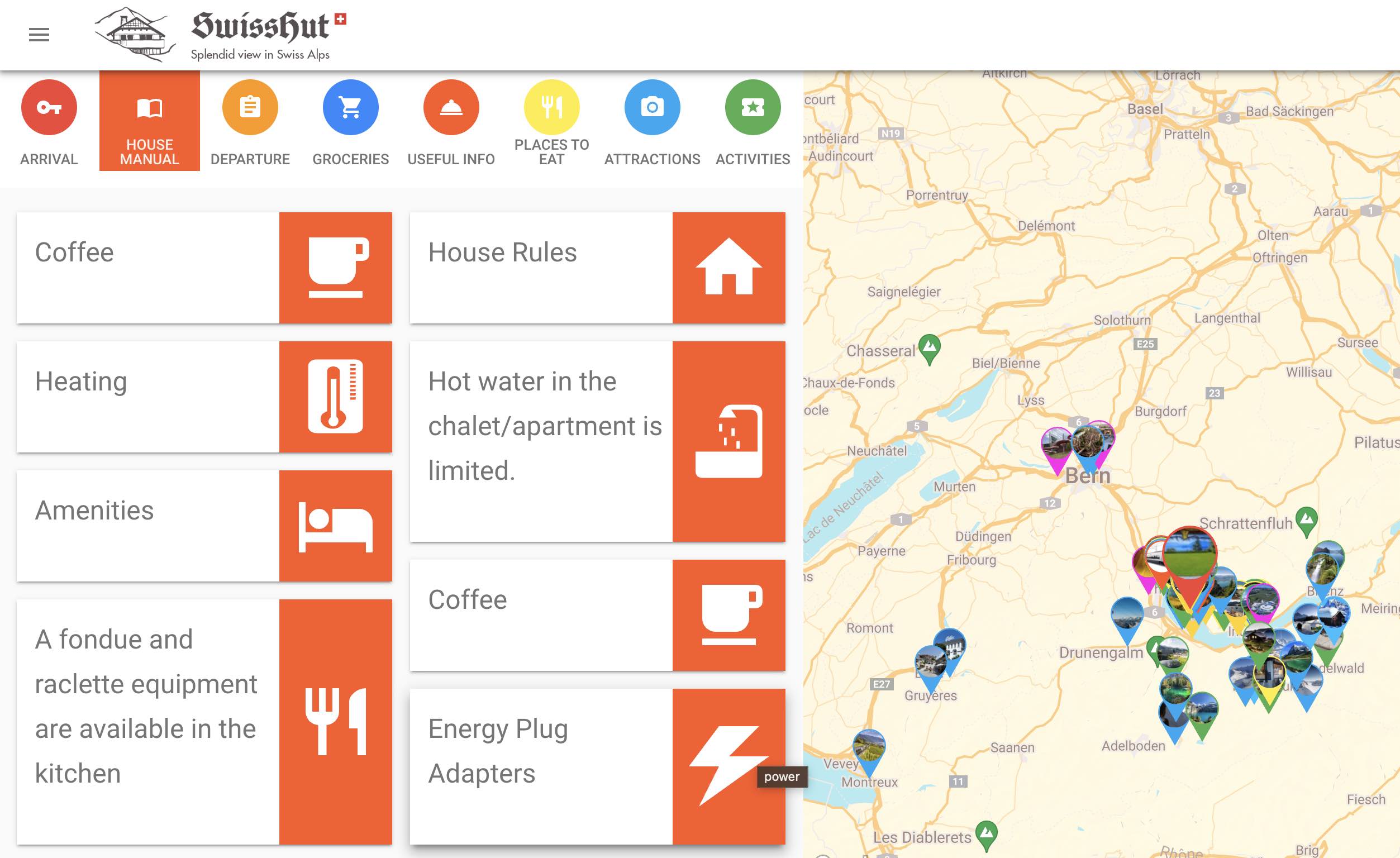
Platforms like Airbnb and Vrbo let you add whether you accept pets to your listing. However, there’s not much space to get specific. Instead, give users an overview of what they can expect and go into more detail in your pre-stay communication and your digital guidebook.
For example, send them a digital guidebook along with their confirmation that states your complete policy. Hostfully enables you to add multimedia, so you can add photographs of off-limits areas or videos on how to use amenities for pets.
Step 2: Set fees and deposits
Decide whether you want to charge extra for pets to offset the higher turnover costs. You should check whether it takes cleaning teams significantly longer to take care of tasks like vacuuming or gardening. If they consistently need another fifteen to thirty minutes, that’s a sign you should add a small fee.
Then decide how much to charge. Airbnb doesn’t publish the average fee, but this long-running discussion on its community forum suggests it ranges from $10 to $30 per pet.
On top of that, consider whether to ask for a refundable deposit to protect your rental against pet-related damages. Property Management Software (PMS) like Hostfully enables you to manage this automatically when you confirm bookings. Just be aware that Airbnb doesn’t allow guests to collect deposits and expects you to use their damage protection to cover your property.
Step 3: Prepare and protect your property
Think about how to tailor your property for pet owners. There’s no need to turn your vacation rental into a kennel, but a few practical choices can prevent the most common issues. For example, durable flooring, washable covers, and easily replaceable furnishings can make dealing with accidents less stressful.
Plus, small pet-friendly touches can improve the guest experience without adding much cost. Providing basics like dog bowls, waste bags, or a designated area for beds signals that pets are genuinely welcome, not just allowed. You can add these amenities to your listing description and photos to reinforce your positioning.
Step 4: Build a cleaning and turnover plan
Adapt cleaning processes once you introduce a pet-friendly policy. This usually means adding tasks like more thorough vacuuming, extra attention to upholstery and soft furnishings, and periodic deep cleans to manage hair and odours.
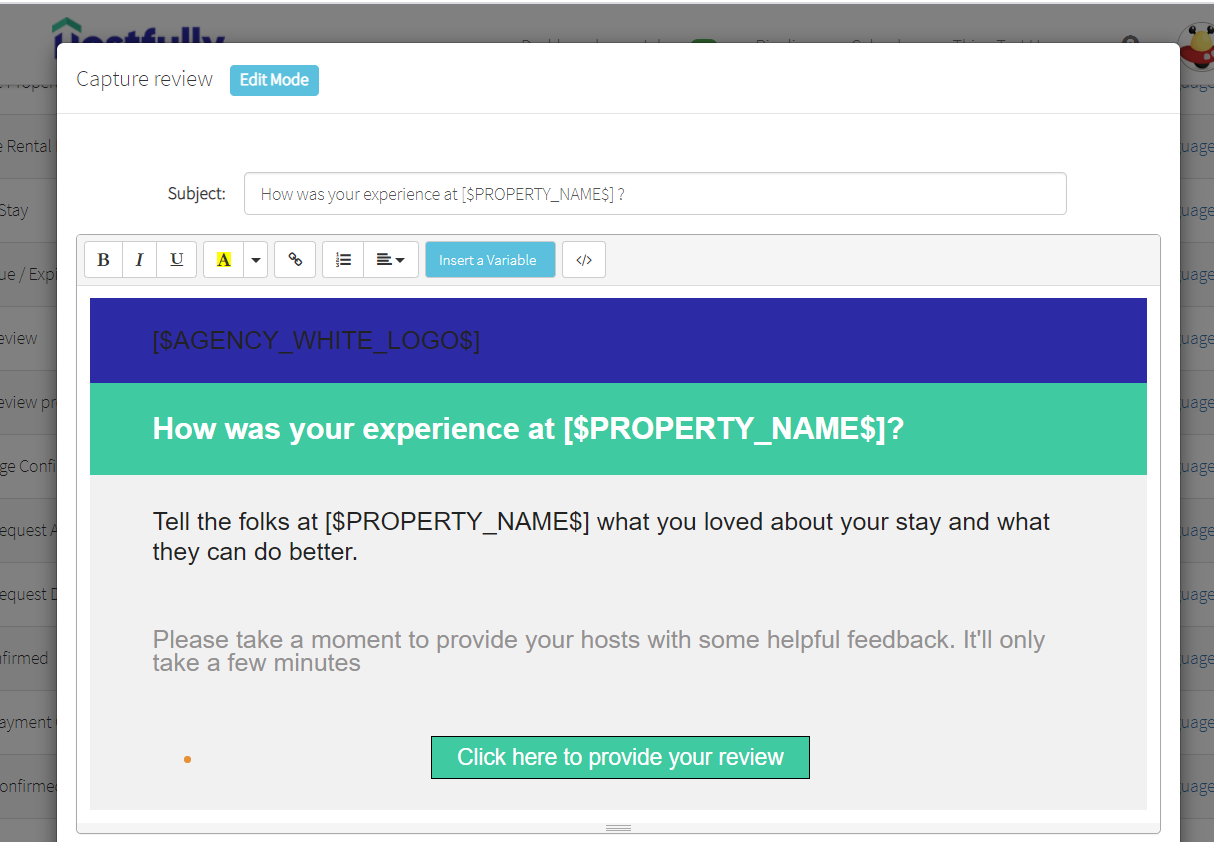
If you don’t handle turnover yourself, make sure your cleaning team understands what your new process involves. This keeps expectations consistent from day one. Provide detailed checklists, step-by-step instructions, and even photos of what a guest-ready property looks like.
PMS like Hostfully helps you manage turnover from afar. Our task automation feature enables you to assign jobs, communicate with teams, and check what’s been done. We also integrate with many dedicated turnover management solutions to allow you to access specialist tools and build out workflows.
Step 5: Check requirements for pets
Before welcoming animals, make sure you’re allowed them in the rental. Management companies typically need to get the agreement of the property owner.
Additionally, review your insurance carefully to confirm what’s included. Some policies don’t account for pet-related damage. Knowing where your coverage starts and ends can help you see whether you need to get additional protection or introduce stricter rules for guests.
Most popular booking sites allow pets but it’s still worth checking their policies. Understanding their requirements around disclosures and fees can help you keep your setup aligned with platform rules.
Step 6: Market the listing to pet owners
Show potential guests that you’re ready to welcome pets. Here are some ways you can use your new policy to market your rentals and stand out from competitors:
- Add filters: Pet owners are likely to apply filters to save time. Check you’ve enabled these so your listing will appear in search results.
- Mention animals in your description: Make it as explicit as possible that you allow pets to make guests feel especially welcome at your properties.
- Use keywords: Don’t just say you allow pets. Include searchable terms in your listing, like ‘pet friendly’ or ‘dog park nearby’.
- Show off pet-related amenities: Add photos of kennels, food bowls, and other features that you’ve added to make pet owners’ lives easier.
- Create dedicated rules for pets: Besides house rules for humans, have a separate section for animals to make it clear what’s allowed.
Pet owners are looking for reassurance that they won’t have any issues due to bringing their pets. Be upfront about what you offer to reduce the risk of unrealistic expectations and attract guests who are a good fit.
Step 7: Promote pet-friendly stays beyond OTAs
Highlighting your pet-friendly positioning on your website and social media platforms can reinforce your niche. They give you a lot more freedom with branding than listing sites. That means if potential guests Google your business, they’ll find that you’re serious about hosting pets.
Direct booking sites let you go beyond photos and descriptions. Depending on how much you want to emphasize your pet-friendly position, you can incorporate it into the visual theme of your webpages with a no-code builder like Hostfully’s. You can also add a few blog articles giving pet owners tips and recommendations on how to make the most of their stay with their furry friend.

Social media platforms let you create and share pet-friendly content. For example, you can repost photos that guests have put on their accounts of them walking their dog in the countryside near your property. You can also comment on posts like these to say how glad you are that they enjoyed their stay.
Make pet-friendly hosting easier to manage with Hostfully
Pet-friendly rentals work best when you set clear expectations, and you’ve got the right processes in place. This helps you welcome pets without constantly worrying about misunderstandings or messes.
Hostfully helps bring that predictability into one place. Instead of keeping track of rules, fees, and communication across platforms, you can manage them together as part of your day-to-day workflow.
With Hostfully PMS, you can:
- Keep pet policies and house rules consistent across multiple channels
- Collect and manage pet fees or deposits alongside bookings
- Share clear pet rules and local tips through digital guidebooks
- Coordinate cleaning and turnover tasks more smoothly
- Keep guest communication in one place
- Highlight pet-friendly stays on your direct booking site
All of this makes it easier to offer pet-friendly stays that feel welcoming to guests and manageable for you. Allowing pets becomes a thoughtful part of how you host — not an extra thing to keep on top of.

Frequently asked questions
Should I charge a pet fee or a pet deposit?
Many hosts charge a pet fee to cover additional cleaning, because it’s simpler to manage. Others prefer a refundable deposit to discourage damage and benefit from more protection. The right choice depends on your property type, booking processes, and typical cleaning and maintenance costs.
Can I allow dogs but not other pets?
Yes, many pet-friendly rentals choose to allow dogs only. There’s a higher demand for dog-friendly accommodation, and they’re generally easier to account for in cleaning processes. Just be explicit in your listing and policies, so guests understand exactly which types of animals you allow.
How do service animals affect pet policies?
Most laws expect you to accommodate service animals. It’s important to understand your obligations as a host and keep your policies clear to avoid legal claims.
What if a guest brings an undeclared pet?
Guests may bring an undeclared pet in the hope you won’t notice. Clarify your rules in your pre-stay communication alongside any consequences to deter this behavior. If you see that someone has an undeclared pet, most listing sites allow you to cancel the booking mid-stay and ask them to leave.


