

TL;DR
Getting more direct bookings for a vacation rental requires a combination of channels working together: a website that converts, SEO that builds long-term organic traffic, OTA listings that funnel brand-aware guests back to direct, email marketing that turns one-time guests into repeat bookers, and a loyalty approach that makes returning direct feel like the obvious choice. The highest-value direct bookings are rarely from strangers who found a property through Google. They are from past guests who had a great stay and came back at zero acquisition cost. A complete direct booking strategy treats repeat and referral business as the primary objective, and new guest acquisition through SEO, paid advertising, and social media as the mechanism that keeps the funnel full.
Online travel agencies (OTAs) are a powerful way to attract guests but relying on them too heavily can lower your profit margins. Every booking that flows through a marketplace also comes with commissions, platform rules, and limited access to customer data.
That’s why many vacation rental operators focus on increasing their direct bookings. When guests book through your own website, you keep more revenue and gain the freedom to build long-term relationships with travelers.
Fortunately, there are many practical ways to increase direct bookings. From SEO and content marketing to loyalty programs and partnerships, a well-rounded strategy can steadily move more reservations to your own site.
Let’s explore some of the best ways to get direct bookings for your vacation rental in this guide.
Why hosts should want more direct bookings
Direct bookings don’t mean abandoning OTAs altogether. After all, popular marketplaces like Airbnb and Vrbo still play an important role in helping travelers discover your property.
But when more guests book directly, you gain several important advantages:
- Lower OTA commissions and fees: OTAs typically charge a commission on every reservation. For example, Airbnb hosts often pay around 14-16% of the total booking amount as of 2026. Direct bookings eliminate many of these fees, allowing you to keep more of your revenue.
- Faster resolutions: When bookings happen through a marketplace, any issues must usually pass through the platform’s support team. Direct bookings give you the ability to communicate with guests and resolve problems more quickly without waiting for a third party.
- More control over operations: OTAs set rules about formatting, word count, images, and more. Your own website lets you present your property exactly how you want and decide your own policies.
- Ownership over the guest relationship: Direct booking websites give you more control over communications with guests, making it much easier to build a rapport and encourage repeat visits.
- Stronger branding: On OTA platforms, your property appears within the marketplace’s design and layout. A direct booking site allows you to showcase your unique brand, helping your business stand out from competitors.
Best ways to get direct bookings for your vacation rental
Increasing direct bookings won’t happen overnight. It usually comes from combining several marketing strategies that help attract potential guests and build confidence.
Here are some different strategies you can try:
1. Identify your target audience
Trying to appeal to everyone rarely works in the vacation rental industry because everyone has such different needs and preferences. For example, families on school holidays and couples on weekend getaways won’t be looking for properties with the same kind of amenities.
The most successful businesses focus on a clear guest profile and tailor their property, messaging, and marketing around that group. Start by analyzing your past bookings. You can look at factors like:
- Where guests traveled from
- Who they were traveling with
- Why they visited
- What nightly rates did they paid
- How long did they visit for
Once you understand who typically stays at your property, you can adjust your marketing and presentation to match. This helps you signal to potential guests that your properties are exactly what they’re looking for and then build the confidence you need to get that direct booking.
2. Develop a unique vacation rental brand
Popular destinations often have hundreds of similar listings, which makes it harder for guests to remember any one property. Major cities like New York, Toronto, and London often stretch into the thousands. A clear brand helps your vacation rental stand out and makes it easier for people to recognize and search for your property later.
Start by defining the type of guest experience your business offers. A city apartment might lean into cultural attractions and historic sites, while a villa in the tropics could emphasize luxury. Your vacation rental brand should reflect this experience through consistent visuals, tone of voice, and the features you highlight.
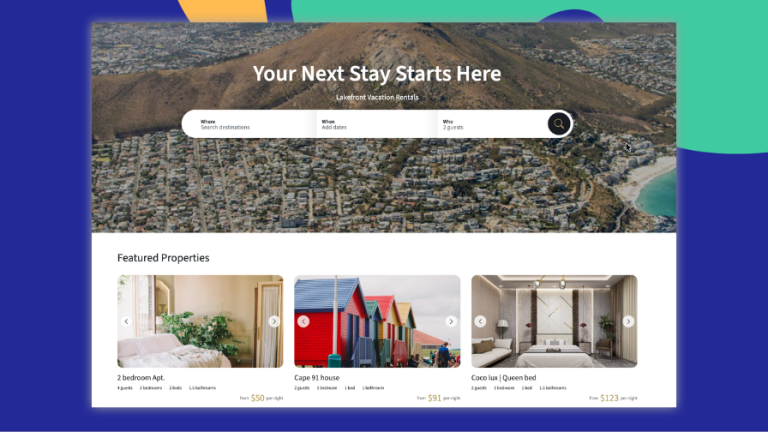
Don’t stop at your website or listings — apply your branding everywhere guests might encounter your property. You must use the same imagery and messaging wherever you advertise your business to appear consistent and trustworthy.
3. Build a vacation rental website designed for conversions
Your direct booking website is the core of your strategy. And it needs to do more than just technically accept reservations. Guests are used to the polish and ease of major OTA platforms. If your site feels clunky, slow, or untrustworthy, they’ll close the tab and go back to Airbnb.
Prioritize creating a smooth user experience over adding lots of flashy features. Visitors should be able to understand what you offer, check availability, and reserve a stay in just a few steps. Include all of the following to help them move from browsing to booking without hesitation:
- Clear calls to action
- A visible booking calendar
- Transparent pricing
- High-quality photos
- Compelling descriptions
- Contact information
No-code builders like Hostfully make your direct booking website easier to manage. Our platform lets you create a custom site with a unique look using a simple drag-and-drop interface. When connected through your Property Management System (PMS), Hostfully also enables you to accept reservations securely and sync availability instantly across multiple channels.
The sites that convert well share a few traits.
- They build trust immediately. Clear branding, professional photos, real guest reviews near the booking button, and transparent pricing all signal to a first-time visitor that your business is the real thing. Without that credibility, hesitation wins. Hostfully’s Direct Booking Site lets you apply your primary and secondary brand colors across every UI element site-wide, so your site looks like a real business from the first scroll, not a generic booking template.
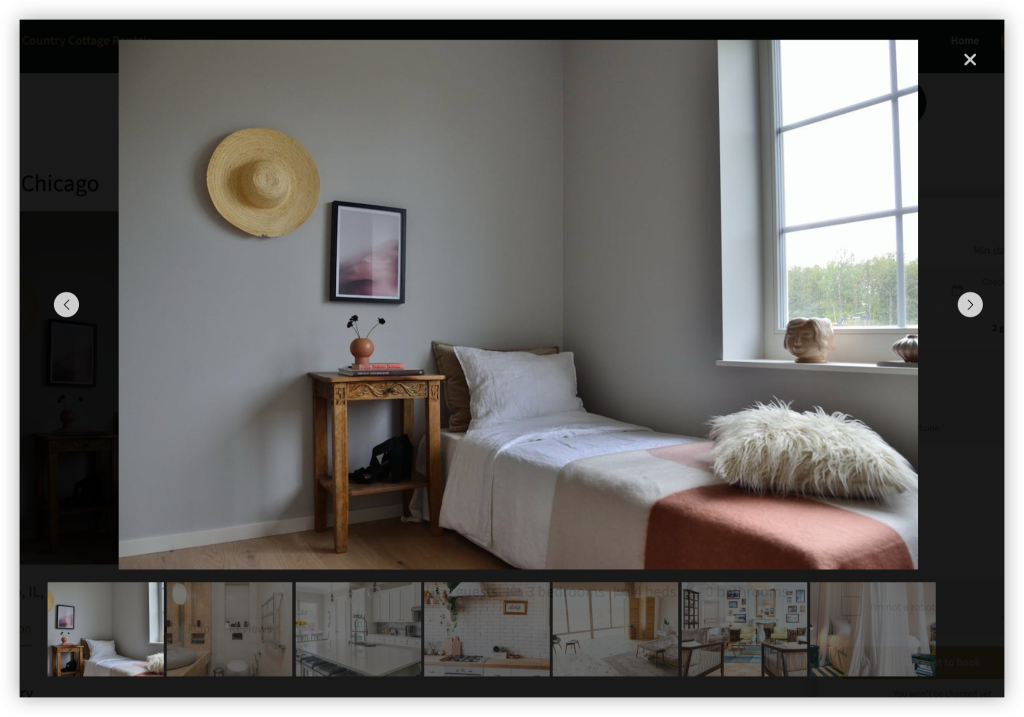
- They show properties clearly, above the fold. Guests decide quickly. If they have to hunt for listings, most won’t. A well-designed search and property page surfaces your properties immediately, with high-quality photos guests can browse in a full carousel without leaving the listing. Keeping that visual experience front and center reduces drop-off before guests even reach the booking flow.
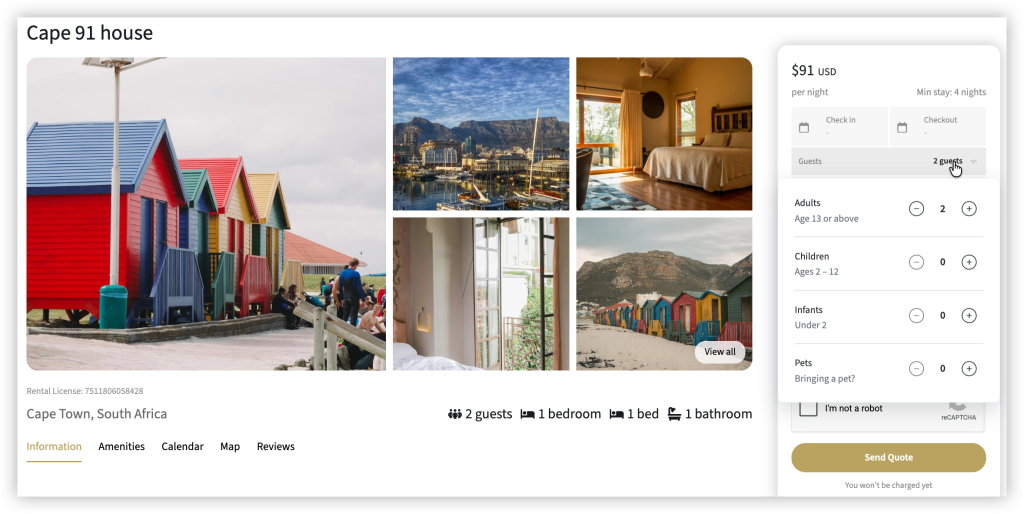
- They remove friction from the booking flow. Guests should be able to check availability, see the full cost including fees and taxes, and confirm their reservation in a few steps. Every extra click or unclear line item is a reason to abandon. That includes letting guests specify their group accurately from the start: adults, children, infants, and pets. When a guest selects a pet, the relevant fee is applied automatically and shown as a line item in the quote. No surprises at checkout, and no support emails asking why the total changed.
- They present your property on your terms. OTA listings are templated. Your direct site is not. You control the layout, the copy, the photos, and the story you tell. That’s a significant advantage when you’re competing in a crowded destination.
- They capture the guest relationship. A direct booking means you have the guest’s contact information, their stay history, and the ability to reach them again. Collecting a phone number at checkout alongside an email address gives you a more complete profile and faster communication when something comes up pre-arrival. That’s the foundation for repeat bookings, which cost far less to generate than acquiring a new guest from an OTA.
Hostfully’s platform lets you create a custom site with a unique look using a no-code-needed interface. And because it’s connected through your Property Management System (PMS), you can accept reservations securely and sync availability instantly across multiple channels.
4. Optimize your website for search engines
Travelers won’t book directly if they can’t find your website. Search engine optimization (SEO) ensures you appear in search results when the right people are looking for accommodation in your area.
Start by structuring your website properly. Each property should have its own page with a clear title, detailed description, and structured headings. Also, incorporate high-volume keywords into the page related to the location, nearby attractions, and amenities — for example, “cozy bungalow just five minutes walk from Malibu beach”.
Technical factors also play an important role. Make sure your site loads quickly, works well across devices, and uses secure HTTPS connections. You should also include internal links between related pages to help search engines crawl your site.
5. Improve local SEO for vacation rental searches
Many travelers start planning their trips by searching for accommodation in a specific destination. Local SEO helps your property appear in those location-based searches, especially in Google Maps and “near me” results.
The first step is creating and optimizing a Google Business Profile for your property or management company. Add the following features:
- Contact details
- Your business name
- A description of the property
- High-quality photos
- Your website link
Keeping this profile updated increases your chances of appearing in map results when travelers search for rentals in your area. It’s also important to keep details consistent across directories like Google, Apple Maps, and TripAdvisor.
Encourage guests to leave reviews on your Google listing as well. Positive ratings and regular activity signal credibility to search engines and can help you appear first on the map when people search your area for accommodation.
6. Create compelling content for your target audience
Creating helpful content about your destination can help you catch travellers early in the planning process. Instead of reaching them when they’re comparing properties, you can appear in their search results when they’re considering where to go or what to do.
Focus on topics your target guests are actively researching. This might include:
- Local travel guides
- Event calendars
- Restaurant recommendations
- Suggested itineraries
- Hidden gems in the area
For example, a cabin in the woods might have blog articles about what wildlife people can see at different times of year. A seaside villa could compare all the beaches in the area and their facilities.
Make sure each article naturally mentions your properties. You can link to relevant listings, highlight nearby attractions mentioned in the guide, and include photos that show how close your rental is to these experiences. Play your cards right, and potential guests may decide to book your property long before they’ve even considered alternatives in the area.
7. Integrate your website with booking and payment tools
Visitors should find it just as easy to reserve a stay on your direct booking website as on an OTA. If guests have to email for availability, wait for a quote, or complete payments off-site, many will abandon the process.
Start with a booking engine that shows real-time availability and pricing. Visitors can select dates, see the total cost (including fees and taxes), and confirm their reservation in one smooth flow. This transparency also builds early confidence with guests who have never stayed at your property before.
Also, make sure you have reliable payment processing with recognizable, international brands so guests can pay securely. Automated confirmations and receipts further reassure travelers that their reservation is confirmed.
PMS like Hostfully simplify these integrations by connecting your website to booking calendars, payment processors, and guest management tools. Our platform enables you to manage reservations and payments from a single system while keeping the entire booking experience on your own website.
8. Keep branding consistent across channels
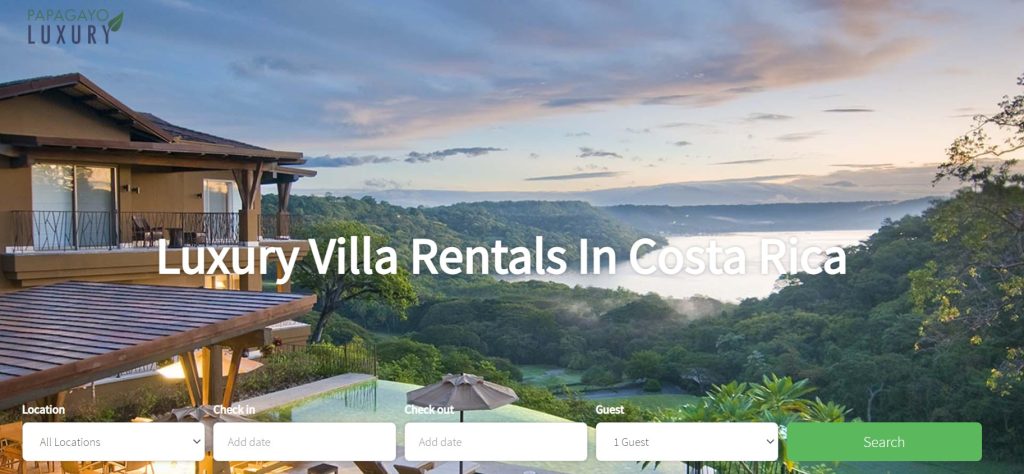
Consistency helps travelers recognize your property whenever they encounter it online. It also enables you to target your audience more effectively and gives your business a more professional look.
All this involves is using the same branding elements across your website, listings, and social media accounts. This includes your name, logo, and primary color palette, as well as tone of voice in all your written content. Also, consider operational details such as your pricing, offers, and availability to ensure everything seems cohesive.
Manually updating details across every channel and platform can be time-consuming and lead to inconsistencies. Use a channel manager instead to automatically sync information. Solutions like Hostfully let you update everything from one centralized dashboard and adjust your strategy where necessary for individual touchpoints.
9. Build a strong social media presence
Social media is less about presenting property details and more about boosting your visibility and credibility. It introduces your business to new travelers who may not be actively seeking accommodation yet and keeps you in the minds of past guests.
Use it to give people an idea of the experience you offer rather than repeating listing information. You can publish the following types of content to engage followers:
- Announcements
- Guest testimonials
- Video tours
- Seasonal views
- Behind-the-scenes videos
Many hosts already have Facebook pages for their properties. However, Instagram Reels and TikTok are becoming more popular as a way to reach audiences far beyond your immediate follower base.
Social media is also useful for real-time updates and promotions. If you have a last-minute offer or discounts for slow seasons, you can share it instantly with your audience. You never know who might be browsing and considering a quick trip away.
10. Use paid advertising to attract potential guests
Paid advertising lets you reach travelers who are already planning a trip to your destination. Instead of waiting for your website to rank organically, you can appear in front of potential guests at the exact moment they’re researching accommodation.
Google Ads is one of the most popular options because it targets people actively searching for phrases like “beachside villa on Crete” or “two-bedroom apartment in London”. It can register this interest and show your ads in their search results. By then linking ads to your website, you can capture traffic that might otherwise go to OTA listings.
Social media advertising works differently to Google Ads. Platforms like Facebook and Instagram let you target specific groups based on location, interests, or previous online behavior. This makes them better for promoting seasonal deals or highlighting unique amenities at your properties.
11. Use email marketing to bring past guests back
Email marketing is one of the most reliable ways to generate repeat bookings because it targets past guests. Unlike advertising, you’re not trying to convince strangers — you’re reconnecting with people you already know enjoyed your properties.
Start by collecting email addresses during the booking process with each guest’s consent. As this information counts as sensitive personal data, you can’t store it without permission in many states and countries.
Then organize everything in a mailing list. You can segment guests by both their demographic (age, nationality, single vs family, etc.) and their behavior (date they reserved, how long they stayed with you, etc.). When you send messages, this helps you target different groups more effectively.
Throughout the year, send occasional messages that are genuinely useful, such as seasonal travel ideas or recommendations for local events. For example, guests who travelled to your city to see a specific concert may be interested to know that the artist is coming back.
Leading PMS like Hostfully integrates with email marketing tools like Mailchimp to automate this process. All you have to do is write the templates, and then you can send post-stay thank-you messages, follow-up offers, or periodic newsletters without managing each email manually.
12. Create loyalty programs and repeat guest incentives
Offer incentives that reward guests for coming back to stay. This could include:
- Repeat guest discounts
- Early access to peak season dates
- Flexible check-in times
- Welcome packages
- Free upgrades
Discount codes are particularly effective because they’re simple to share and track. You can send them in post-stay emails, include them in newsletters, or add them to posts. Many hosts also create codes tied to specific campaigns, such as off-season promotions or local events.
PMS like Hostfully allows you to create and manage discount codes directly within your booking system. Just select the settings you want to generate the code. When guests enter it into the promo field at checkout, the system automatically applies the discount.
13. Partner with local businesses and tourism providers
Local partnerships help you attract guests while improving the experience they have during their stay. These partnerships can also generate referrals. Businesses often receive questions about travelers about where to stay — building relationships with trusted operators in your area means they’ll be more likely to recommend your rentals.
Research businesses in your local area that complement the experience you offer. A beach rental might partner with surf schools or boat tours whereas a city apartment may reach out to nearby boutiques. Then try to negotiate small offers in return for featuring the business on your website and in your guidebook.
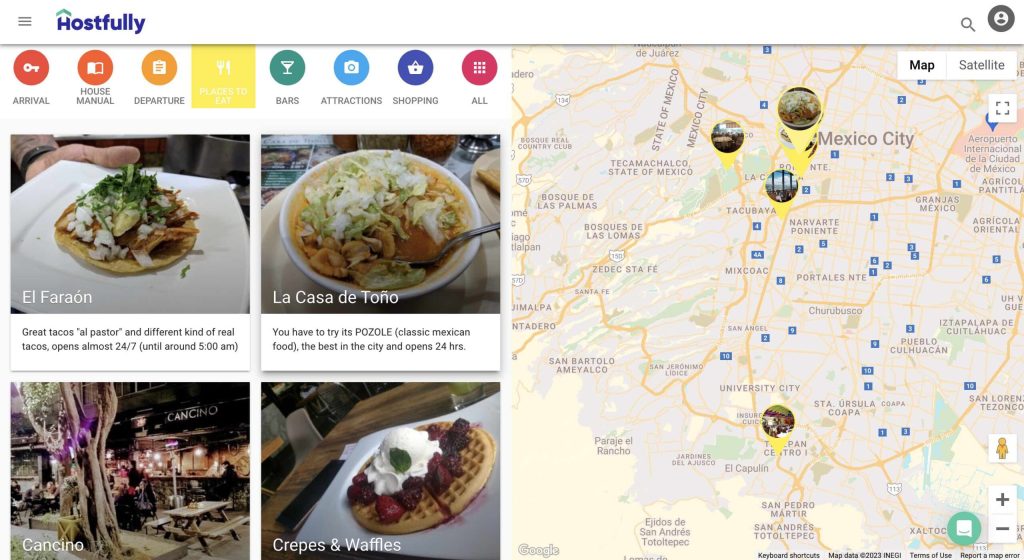
Digital guidebooks are a practical way to give guests these recommendations. Platforms like Hostfully allow you to organize them into categories, add photographs, and write details. Our map feature also lets you pin the exact location so guests know where everything is in relation to your rental.
14. Publish guest reviews and testimonials
Guest feedback helps you gain the trust of potential guests faster. When travelers book through listing sites, they often rely on platform ratings and reviews to confirm that a business is legitimate and offers a great stay. Your website needs to provide the same reassurance.
Display real guest feedback in strategic places around your website like near your booking buttons or property descriptions. You should highlight reviews that mention key decision factors: cleanliness, communication, and overall experience. These details help potential guests see you can meet their expectations and feel more confident about booking.
There’s no need to ask guests for testimonials. PMS like Hostfully can automatically nudge them to leave feedback and pull reviews from your listing pages. All that’s left to do is check what people say and decide which ones to display on your website.
15. Prioritize mobile-friendly booking experiences
Over half of transactions happen on handheld devices according to a 2026 Adobe report. Your website must be mobile-friendly or many visitors will abandon it and return to OTAs where the booking flow is optimized for smartphones and tablets.
The most important step is to use a website builder with responsive templates like Hostfully. These templates automatically adapt to different screen sizes so you don’t have to play with the settings every time you update your design.
Page speed also matters more on mobile networks. Compress large images, avoid cluttered layouts, and keep the booking process short so guests don’t have to navigate multiple pages before confirming their stay.
Increase direct bookings and streamline operations with Hostfully
Direct bookings give you more control over your business, from reducing OTA fees to building stronger relationships with guests. But increasing them takes a combination of marketing, branding, and a website designed to convert visitors into reservations.
One reason property managers avoid building out a direct booking channel is the operational overhead. Managing a separate site, a separate calendar, separate payments, and separate guest communications feels like more work, not less. The right property management system eliminates that concern. When your direct booking site connects to a centralized PMS, reservations flow into the same dashboard, calendars stay in sync across every channel automatically, and guest communications happen in one place.
Hostfully’s Direct Booking Engine is built exactly this way. It gives property managers a conversion-ready site with brand control, integrated pricing and fees, discount codes, and guest data collection, all connected to the Hostfully PMS so nothing falls through the cracks.
The commission structure reflects the value: Hostfully charges 0.85% on gross booking value, compared to the 15-20% OTAs take. At any booking volume, that difference compounds quickly.
Hostfully helps property managers turn that strategy into a reliable direct booking engine while keeping every part of their operation connected in one place.
With our help, you can:
- Launch a customizable direct booking website
- Sync listings, calendars, and rates across platforms with our channel manager
- Streamline communication with message automation and email integrations
- Offer discounts to encourage repeat bookings
- Showcase guest reviews and testimonials directly on your website
- Create digital guidebooks that enhance the guest experience
- Accept secure payments through integrated booking and payment tools
All you need is the right systems to support your marketing efforts until growing your share of direct bookings becomes a realistic and sustainable path for your vacation rental business.
The property managers who benefit most from direct bookings aren’t the ones who eventually get around to it. They’re the ones who invest early in a professional site, build their SEO presence over time, and collect guest data before they need it. OTAs won’t lower their commissions. But the property managers who treat their direct site as a real channel, not a backup, keep more revenue, build stronger brands, and create the kind of guest relationships that generate bookings for years.
That’s a compounding advantage. And it starts with a site worth sending people to.
Ready to see what Hostfully’s Direct Booking Engine can do for your business?

FAQs about direct bookings for vacation rentals
What are direct bookings for a vacation rental?
Direct bookings are simply when guests reserve a property through your website rather than an OTA like Airbnb or Vrbo. This involves you managing the reservation directly, including communication, payments, and policies.
How can I get more direct bookings for my vacation rental?
Increasing direct bookings usually means combining several strategies. Building a professional website is the first step to driving traffic but improving SEO visibility, strong branding across channels, and staying in touch with past guests through email marketing can also help travelers discover your business.
Do guests prefer booking directly or through OTAs?
Many travelers initially discover properties through OTAs because these platforms make it easy to compare listings in one place. However, they may choose to book directly when they want better pricing, or are returning for another stay.