

Quick Summary
The strongest-performing vacation rental businesses list on multiple platforms, not just Airbnb. According to Hostfully’s 2025 industry survey of 256 property managers, Airbnb accounts for 45% of bookings on average, with Vrbo at 15%, Booking.com at 14%, and direct reservations at 20%. Operators who diversify across channels report stronger occupancy rates and more stable revenue than those dependent on a single platform. The most-used alternatives are Vrbo, Booking.com, HomeToGo, Marriott Homes & Villas, Plum Guide, Hipcamp, Houfy, and Google Vacation Rentals. Each platform serves a different guest segment, carries different host fees, and requires different listing requirements.
Airbnb is the starting point for most hosts, but it rarely stays the only platform that matters. Platform fee increases, algorithm changes, and heavier competition in popular markets have pushed professional property managers to look at the wider booking landscape: not to replace Airbnb, but to stop relying on it exclusively. The operators who hold up best through slow seasons and market shifts are the ones with bookings coming from multiple sources. This guide covers the most effective Airbnb alternatives for hosts in 2026: what each platform is best for, what it costs, and how to think about building a channel mix that fits your portfolio.
Why should hosts list on more than one booking platform?
Listing on multiple platforms is the single most reliable way to protect booking volume when one channel underperforms. Hostfully’s 2025 Vacation Rental Industry Survey found that operators with diversified booking mixes reported stronger occupancy and revenue stability than those concentrated on one OTA. The most growth-oriented managers treated multi-channel distribution as a core business decision, not a bonus strategy.
Industry stat
83% of vacation rental operators reported increased competition in 2024, the highest figure recorded since 2019. Operators who responded by diversifying their channel mix were significantly more likely to maintain occupancy and forecast revenue growth for 2025. Source: Hostfully 2025 Vacation Rental Industry Study
There are three practical reasons to diversify. First, different platforms reach different guest types: Vrbo skews toward families booking entire homes for longer stays, while Booking.com reaches a high volume of international travelers. Second, spreading bookings across channels reduces the revenue impact of any single algorithm update or platform policy change. Third, each additional channel adds visibility without proportionally adding management overhead, particularly when listings are synced through a property management system.
Sally Henry, VP of Business Development, Key Data
“Not all channels are created equal. They will all perform differently. They all have a place in your strategy, but please make sure you understand that they’re part of your strategy and use them for how you can best optimize your revenue and your calendar occupancy billing for your own business. Not all properties will perform the same on all different channels.”
Source: Hostfully webinar, “From Tariffs to Travel: Why OTAs are Winning 2025” (July 2025)
The 2025 Hostfully Industry Study also shows a scale effect. Operators managing 20 or more listings showed the most balanced channel mixes in the survey. Managers with 100-plus properties drew the highest share of bookings from direct channels and secondary OTAs, which contributed directly to their stronger revenue outlooks. Multi-channel distribution compounds as portfolios grow.What are the best Airbnb alternatives for hosts in 2026?
The platforms below are organized by tier. The major alternatives carry the volume and should be the first additions to any Airbnb-led strategy. The specialist platforms serve specific property types or guest segments and become relevant depending on what you manage.
Major platforms
These four platforms have the reach, traffic, and booking infrastructure to move the needle for most portfolios.
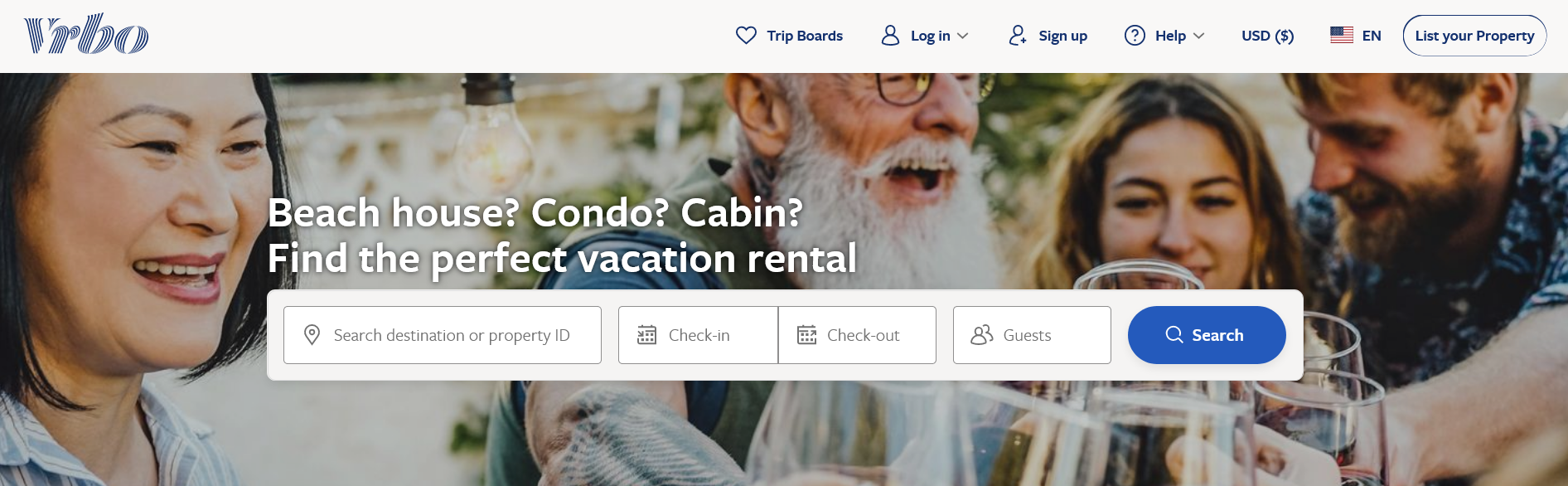
Vrbo is the most direct Airbnb alternative for hosts with entire-home properties. As part of the Expedia Group, it reaches over 2 million listings in 190 countries. Its audience skews toward families and groups booking for longer stays, which makes it a natural complement to Airbnb rather than a replacement. Vrbo does not list shared spaces or private rooms, so it is best suited for standalone properties. Hosts pay 8% per booking, split between a 5% commission and a 3% payment processing fee. Vrbo discontinued new annual subscriptions in August 2025; legacy subscribers can still renew, but all new hosts use the per-booking model only. The 8% is applied to the booking subtotal including cleaning fees, worth factoring into how you price those line items. Vrbo integrates with most vacation rental software, making calendar and rate sync straightforward.
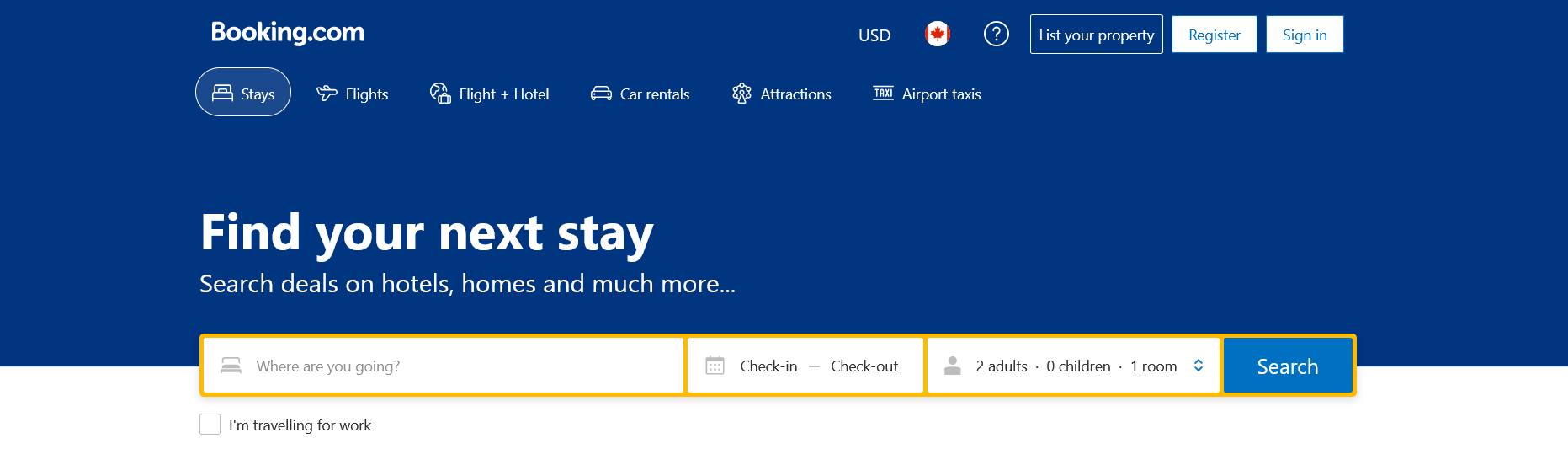
Booking.com is the platform with the broadest international audience, particularly in Europe, where it holds dominant market share. It operates in more than 220 countries, lists over 28 million properties including vacation rentals, and draws a high volume of travelers who prefer Booking’s familiar interface and loyalty program. Commission rates run from 10% to 25% depending on market and property type, higher than Vrbo or Airbnb’s host-only model, but offset by booking volume in markets where Booking.com leads. For portfolios with international guests or properties near cities and resort destinations, Booking.com tends to outperform Vrbo. The tradeoff is a steeper commission structure and a more demanding review system.
James Varley, CEO, HostPlanet
“Airbnb and Booking.com, they’re not just discovery platforms anymore, they are decision engines. They match the intent to the inventory extremely well and very quickly.”
Source: Hostfully webinar, “From Tariffs to Travel: Why OTAs are Winning 2025” (July 2025)
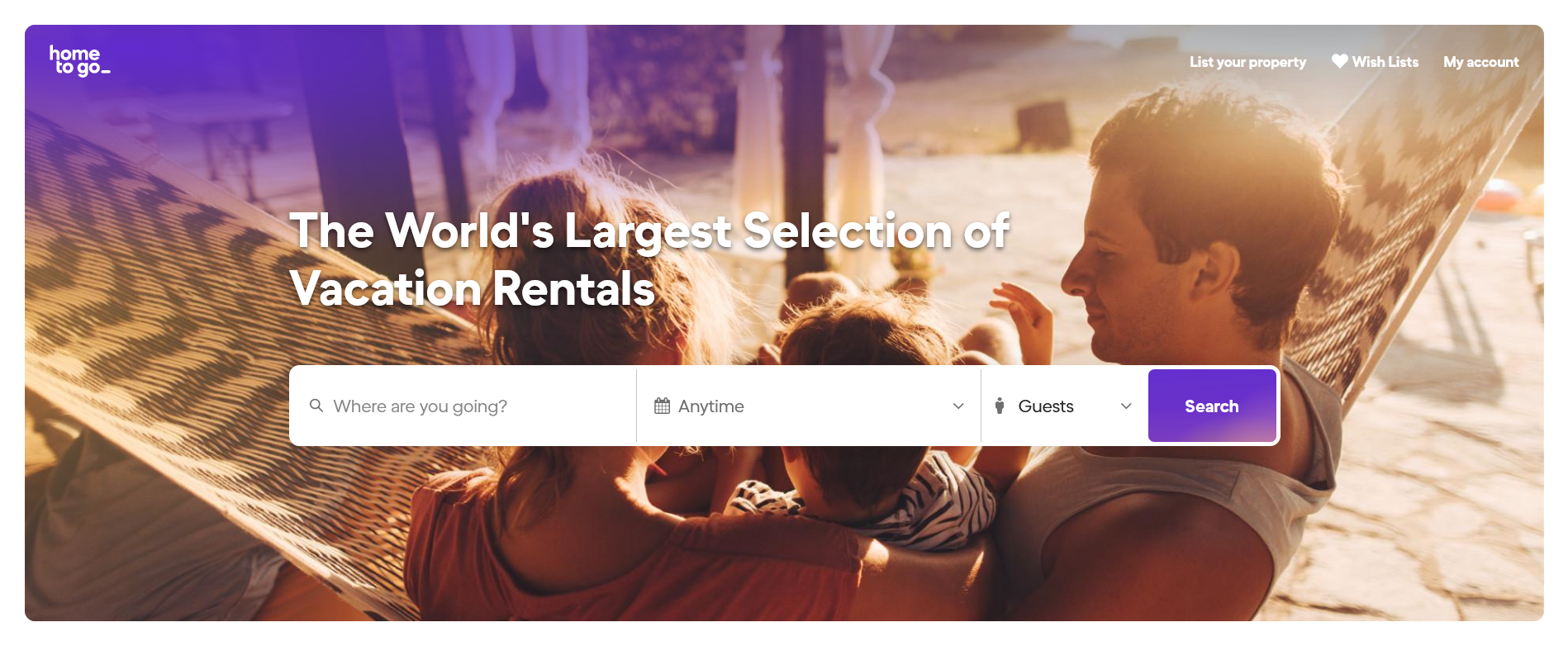
HomeToGo is a vacation rental metasearch platform that aggregates listings from other OTAs and direct booking sites. It does not charge hosts directly; exposure comes through syndicating your listing via a channel manager or PMS that has a HomeToGo connection. With roughly 50 million monthly visits concentrated in Europe, it provides meaningful incremental visibility at low marginal cost once your distribution infrastructure is in place. For portfolios with European markets or strong international demand, HomeToGo is worth activating as a passive additional channel.
Google Vacation Rentals surfaces vacation rental listings directly in Google Search results and on Google Maps. Hosts cannot list on Google directly; they need a channel manager or direct booking website with a Google Vacation Rentals integration. Google does not charge commission, but credit card processing fees still apply to direct bookings. The primary benefit is visibility at the moment of search intent, before a guest reaches any OTA. Because Google captures demand upstream of the booking platforms, it functions differently from the other channels here. It functions less as a booking platform in itself, and more as a direct booking driver for hosts who have their own booking infrastructure.
Specialist and niche platforms
These platforms serve narrower audiences but can significantly outperform the majors for the right property type.
Marriott Homes & Villas lists high-quality vacation rentals alongside Marriott’s hotel inventory, giving hosts access to Marriott Bonvoy members who travel on points. Properties must meet strict quality standards for photography, amenities, and response time. For luxury or premium properties in resort and urban markets, Marriott Homes & Villas delivers a guest demographic that expects and pays for premium experiences. Commission is 10–12% on most markets.
Plum Guide curates a small percentage of available vacation rentals against a 150-point quality assessment. Fewer than 10% of submitted properties are accepted, which means less competition for those that qualify and a premium guest who is actively choosing quality over price. Average nightly rates on Plum Guide are significantly higher than comparable Airbnb listings. For hosts with genuinely premium properties, Plum Guide acceptance is a meaningful revenue driver. Host commission is 3%.
Hipcamp focuses on outdoor and nature-adjacent stays: campsites, glamping, cabins, treehouses, and properties with land access. If any of your portfolio fits this category, Hipcamp reaches a distinct guest segment that does not typically search Airbnb first. Host commission is 10%.
Houfy is a direct booking platform with no guest service fees and a commission-free model for hosts. It does not generate the organic traffic volumes that major OTAs do, but it functions as a low-cost booking mechanism for returning guests who prefer to rebook without platform fees. A free plan is available; paid plans start at $7.99 per month. Best used as a retention channel rather than a top-of-funnel acquisition tool.
Whimstay is the leading last-minute vacation rental marketplace, built specifically around the 30-day booking window. It connects spontaneous, value-driven travelers with properties at discounted rates, targeting the gap nights that sit unbooked across most portfolios. More than 50% of vacation rental properties go unoccupied on any given night; Whimstay’s model is designed to turn those vacancies into revenue rather than letting them expire. The platform charges a 5% host commission with no exclusivity requirements, meaning you can list alongside all your existing channels. For professional property managers, Whimstay integrates directly with Hostfully and 21 other PMS platforms. Independent hosts can onboard by importing an existing Airbnb profile. Coverage spans the US, Canada, Mexico, the Caribbean, and Europe. Whimstay is best used as a yield management layer on top of your primary channels, activated during shoulder season, mid-week gaps, and post-cancellation windows rather than as a year-round primary distribution channel.
getawayGoGo is a last-minute direct booking marketplace targeting travelers within 14 days of arrival, a segment that represents roughly 44% of US leisure bookings according to the platform’s own data. Unlike OTAs that charge percentage-based commissions, getawayGoGo charges a flat $10 fee per booking regardless of nightly rate, which eliminates the incentive for hosts to inflate prices to cover commission costs. There are no guest-facing service fees, which makes listed rates directly competitive with what guests see elsewhere. Property managers are the merchant of record, meaning reservation funds go directly to the host rather than flowing through the platform. getawayGoGo connects with Hostfully and a range of other channel managers including Escapia, Hostaway, and OwnerRez. Like Whimstay, it is most effective as a gap-filling channel rather than a primary booking source, particularly valuable for properties in markets with high last-minute demand, such as beach destinations, national park areas, and event-driven cities.
Vacasa is a full-service property management company rather than a booking platform. It manages listings, pricing, and guest communication on behalf of owners. It is not a channel to list on independently, but relevant to know as a competitive context: Vacasa handles distribution across Airbnb, Vrbo, and Booking.com for its managed properties, which is the model many smaller operators aspire to replicate through their own PMS setup.
How do host fees compare across Airbnb alternatives?
Fee structures vary significantly across platforms and directly affect your net revenue per booking. The table below shows the standard host-facing fees for the major platforms as of 2026. Note that Booking.com rates vary by market and contract terms.
| Platform | Host fee / commission | Guest service fee | Best for |
|---|---|---|---|
| Airbnb (PMS / host-only model) | 15.5% | None | Urban, unique stays, rooms. Standard model for most professional hosts since Oct 2025 |
| Vrbo | 8% (5% commission + 3% processing) | 6–15% (guest pays) | Entire homes, families, longer stays. Annual subscription discontinued for new hosts Aug 2025 |
| Booking.com | 10–25% (market-dependent) | Included in commission | International, urban, high-volume |
| Marriott Homes & Villas | 10–12% | Varies | Luxury, premium properties |
| Plum Guide | 3% | 15% (guest pays) | Curated premium properties |
| Hipcamp | 10% | Varies | Outdoor, glamping, cabins |
| Houfy | 0% (free or $7.99/mo plan) | None | Direct / repeat bookings |
| Whimstay | 5% | 5–10% (guest pays) | Last-minute gap nights, shoulder season |
| getawayGoGo | $10 flat fee per booking | None | Last-minute direct bookings, no-commission model |
| Google Vacation Rentals | 0% (CC processing applies) | None | Direct booking via search |
The lowest commission is not always the best choice. Platforms with higher guest-facing fees sometimes suppress booking conversion, while platforms with higher host commissions (Booking.com) may generate booking volume that fully offsets the cost. Evaluate net revenue per booking across platforms over a 90-day window before drawing conclusions about which channel is performing.
What does channel mix actually look like in practice? (2025 benchmarks)
The booking distribution data from Hostfully’s 2025 Vacation Rental Industry Survey (covering 256 property managers across North America, Europe, Latin America, and Australia) shows a clear picture of how professional operators actually spread their bookings, and how that mix shifts with portfolio size.
Overall booking distribution (all respondents)
| Channel | Share of bookings | Key takeaway |
|---|---|---|
| Airbnb | 45% | Dominant but not a majority; most businesses need at least two more channels to match its volume |
| Direct bookings | 20% | Has plateaued at this level since 2022 despite investment; growing it past 25% requires a sustained direct booking strategy |
| Vrbo | 15% | Higher Vrbo share correlates with more stable revenue expectations in the survey data |
| Booking.com | 14% | Strongest contribution in urban and European markets; underused in leisure-only portfolios |
| Expedia | 2% | Lower adoption among STR operators; overlaps with Vrbo under the same Expedia Group umbrella |
| Marriott Homes & Villas | 1% | Small share overall, but outsized for luxury portfolios in resort markets where Bonvoy travelers are active |
| Other channels | 3% | Includes niche platforms, HomeToGo, last-minute marketplaces, and regional OTAs |
Sally Henry, VP of Business Development, Key Data
“The average booking window for Airbnb is the shortest. So if most of your bookings are coming from Airbnb, you’re going to attract a certain type of booking behavior into your business. You’re going to have to educate both your pricing (how long do you hold your pricing) and also educate your owners so that they understand this is a metric that’s normal.”
Source: Hostfully webinar, “From Tariffs to Travel: Why OTAs are Winning 2025” (July 2025)
How channel mix shifts with portfolio size
The survey data shows a consistent pattern: the larger the portfolio, the more balanced and deliberate the channel mix. Small hosts are heavily platform-dependent; larger operators have built distribution infrastructure that reduces that dependency.
| Portfolio size | Airbnb share | Direct share | Distribution behavior |
|---|---|---|---|
| 1–10 listings | Majority of bookings | Smallest of any group | Most platform-dependent; forecast lower revenue growth than diversified peers |
| 20–100 listings | No longer dominant | Rising | Most balanced mix in the dataset; actively increases secondary OTA share when competition rises in their market |
| 100+ listings | Minority share | Highest of any group | Broadest channel coverage; strongest revenue outlook; 76% use API-driven or custom distribution systems |
Revenue impact of diversification
The survey data makes the revenue connection explicit, not just implied. Operators who saw occupancy rise in 2024 anticipated 21% revenue growth; every one of them forecast gains. Operators with no lift in either ADR or occupancy expected only 11% revenue growth. The performance gap between these two groups consistently correlated with one factor: the more diversified operators used a richer technology stack and spread bookings across multiple channels. In competitive markets, the ability to maintain occupancy while others lost it came directly from better distribution, not better properties.
Industry stat
Operators who reported increasing ADR in 2024 expected 19% revenue growth; those without ADR gains expected only 15%. The managers in both groups who maintained pricing power or occupancy stability were typically those who used a richer technology stack and spread bookings across multiple channels. Source: Hostfully 2025 Vacation Rental Industry Study
Which platform works best for different property types?
The right channel mix depends on what you manage. There is no universal configuration that works equally well across all property types, markets, and guest demographics.
For entire-home properties in leisure markets, the core stack is Airbnb plus Vrbo. These two platforms together reach the largest share of leisure travelers booking full homes. Add Booking.com if your market draws international guests, and HomeToGo for passive European visibility. This combination covers the widest guest base without significant overlap.
For luxury properties, Plum Guide and Marriott Homes & Villas both justify the additional setup effort. Plum Guide acceptance is competitive but delivers a guest who converts at higher nightly rates with fewer price negotiations. Marriott Bonvoy integration is valuable for properties in resort destinations where loyalty-program travelers make up a meaningful share of demand.
For outdoor and nature-adjacent properties, Hipcamp is the most targeted channel available. A treehouse, cabin, or glamping property listed on Airbnb will compete against the full inventory of urban apartments and standard homes. On Hipcamp, the same property is in its natural category and reaches guests who specifically searched for that type of experience.
For mid-term rentals (30 days and longer), Furnished Finder and Airbnb’s monthly pricing feature are the main channels. Booking.com also supports mid-term stays. The guest profile shifts toward traveling nurses, remote workers, and corporate relocations, and pricing strategy changes accordingly.
Manage every channel from one place
Hostfully connects to Airbnb, Vrbo, Booking.com, and more, syncing calendars, rates, and listings automatically so you can list broadly without adding manual work. Book a demo to learn more.
How do you manage listings across multiple platforms without double-booking?
The operational risk of multi-channel distribution is the double-booking: two guests booked for the same property on the same dates through different platforms. The solution is a property management system with a real-time channel manager that syncs availability across every connected OTA the moment a reservation is confirmed on any one of them.
Beyond calendar sync, a good channel manager also handles rate updates and listing content across platforms from a single point of control. This is where most operators underestimate the time savings. When you update a nightly rate, adjust a minimum stay, or add a new property, those changes push to every connected platform without requiring you to log into each one separately. At Hostfully, once your listing sites are connected, an update or a new property creation publishes to all your platforms at the click of a button.
Steven Peterson, President, Ur Home In Philly (200 listings)
“Multi-channel distribution is at the core of our business, and Hostfully makes it effortless. More exposure means more bookings without adding work.” Peterson doubled his distribution from one major channel to five-plus OTAs after switching to Hostfully, with zero double-bookings across 200 properties. Read the full story.
When evaluating a PMS for multi-channel management, look for direct API connections to the platforms you want to activate, not third-party middleware connections that introduce lag. Also confirm that the system handles two-way sync: not just sending your availability out to the OTAs, but pulling confirmed reservations back in real time. A one-way sync that updates every few hours is not adequate protection against double-bookings during peak demand periods.
Why adding more channels can actually hurt your revenue
Multi-channel distribution is widely treated as an unqualified good. More platforms, more bookings, more revenue. But that framing glosses over the ways that poorly executed channel expansion actively damages business performance, and most operators only realize it after the damage is done.
Insider’s perspective
Brise Carpenter, VP Customer Success, Hostfully: “The operators I see struggle the most with multi-channel distribution are not the ones who are listed on too few platforms. They are the ones who are listed on too many, too fast, without the systems to manage them. They end up with inconsistent pricing, listing drift, and guest experience problems that are invisible in their booking dashboards but very visible in their reviews. The revenue story looks fine until you do the math on refunds, review penalties, and the cancellations that come from double-bookings they didn’t catch in time.”
There are three specific mechanisms through which channel expansion can hurt revenue rather than helping it.
Problem 01
Rate inconsistency
When five platforms carry slightly different base rates, minimum stays, and cleaning fee structures, guests notice. Some platforms penalize listing visibility when they detect pricing conflicts. Others let it stand while guests leave reviews complaining about the lower rate they found elsewhere. Either outcome erodes both margin and ranking.
Problem 02
Listing quality dilution
A listing built for Airbnb’s algorithm is not optimized for Vrbo’s. Hosts who copy-paste content across platforms and never maintain it end up with stale photos, outdated amenity lists, and descriptions that no longer reflect the property. On platforms that weight listing completeness in search ranking, a neglected listing is penalized: the host is present but effectively invisible.
Problem 03
Review fragmentation
A property with 200 Airbnb reviews and 4 Vrbo reviews reads as unproven to a Vrbo guest. Spread too thin across channels, you end up with no platform where social proof is strong enough to convert at premium rates. Concentrated review volume on fewer channels consistently outperforms thin volume spread across many.
None of this means hosts should list on fewer platforms. It means channel expansion requires intention, and a clear-eyed view of where review volume is actually building.
What should hosts avoid when listing on Airbnb alternatives?
Multi-channel distribution is straightforward in principle but easy to get wrong in practice. Most mistakes fall into one of six categories, and each one either costs money, creates guest problems, or wastes the time you were trying to save.
| Mistake | What goes wrong | What to do instead |
|---|---|---|
| Expanding without a real-time channel manager | Every new platform is another surface for double-bookings. Manual calendar updates or delayed sync tools are not reliable protection during peak booking windows. | Establish a two-way syncing channel manager before adding any channel. Infrastructure first, distribution second. |
| Using identical listing content across all platforms | Airbnb copy written for a broad audience underperforms on Vrbo (family whole-home buyers) and badly misfires on Plum Guide (luxury design-forward guests). The conversion rate drops and the platform may deprioritize your listing. | Tailor the headline, lead description, and lead photo selection to match each platform’s primary guest demographic. This does not mean a full rewrite: a targeted adjustment to the opening two sentences is often enough. |
| Adding too many channels at once | Activating five platforms simultaneously makes it impossible to isolate which one is performing, which is wasting commission, and which guest segment is responding. You end up with noise, not data. | Add one channel at a time. Run it for 60 to 90 days before activating the next. Compare net revenue per booking (not gross bookings) against your Airbnb baseline to judge true performance. |
| Choosing platforms by commission percentage alone | A platform with a 3% host fee that drives three bookings a year produces less revenue than a platform with a 15% host fee that fills your calendar in shoulder season. Commission percentage is an input, not an outcome. | Evaluate net revenue per booking and booking volume together. Factor in which guest demographic each platform reaches and whether that demographic matches your property type and market. |
| Ignoring platform-specific listing requirements | Plum Guide’s curation process, Marriott Homes & Villas’ photography standards, and Booking.com’s response time requirements are not optional. Failing to meet them results in lower visibility, reduced search ranking, or outright rejection. | Read each platform’s host quality standards before listing. Budget time for a dedicated photography session if your current images were shot for Airbnb; they may not meet the bar for premium platforms. |
| Setting the same pricing across all channels | Guest-facing fees vary significantly by platform. A $200 nightly rate produces different net revenue on Airbnb (host pays 15.5% under host-only model) versus Vrbo (host pays 8%, guest pays 6–15% separately) versus Booking.com (host pays 10–25%). Identical rates mean you are underpricing on some platforms and leaving margin on the table on others. | Use a dynamic pricing tool that adjusts base rates per channel based on the fee structure and demand signals for each platform. Most PMS integrations support per-channel rate overrides. |
The underlying principle across all six mistakes is the same: treat each platform as a distinct distribution channel with its own audience, economics, and requirements, not as a copy of Airbnb with a different logo. The operators who generate the strongest results from multi-channel distribution are the ones who approach it with the same analytical discipline they apply to pricing and occupancy.
Which Airbnb alternative fits your business?
Choose what describes your portfolio. Your best-fit channels update instantly.
Your best matches
Fees and availability vary by market. Platform information reflects mid-2026 data.
Frequently asked questions about Airbnb alternatives for hosts
What is Airbnb’s biggest competitor?
Vrbo is Airbnb’s largest direct competitor, particularly for entire-home rentals. It is part of the Expedia Group and has over 2 million listings across 190 countries. Booking.com competes at a broader scale globally and holds dominant market share in Europe. For hosts, Vrbo and Booking.com together represent the most significant booking volume outside of Airbnb.
What is the best Airbnb alternative for hosts?
Vrbo is the most popular Airbnb alternative for hosts with entire-home properties, particularly in leisure and family markets. Booking.com is the strongest alternative for hosts targeting international travelers or urban markets. The right choice depends on property type, location, and guest demographics. Most professional property managers list on both Vrbo and Booking.com alongside Airbnb to diversify their booking mix.
Can you list on Airbnb and Vrbo at the same time?
Yes. Listing on both Airbnb and Vrbo simultaneously is standard practice for professional property managers. The key requirement is a property management system or channel manager that syncs availability across both platforms in real time. Without real-time sync, double-bookings become a significant risk when a property is listed on multiple platforms.
What are the fees for listing on Vrbo compared to Airbnb?
Vrbo charges new hosts 8% per booking, split between a 5% commission and a 3% payment processing fee. The annual subscription was discontinued for new hosts in August 2025; only existing legacy subscribers can renew. Guests pay a separate service fee of 6–15% on top of your listed rate. Airbnb now charges most PMS-connected hosts a 15.5% host-only fee with no separate guest fee. Vrbo’s total host-facing cost is significantly lower, though the added guest fee at checkout can affect conversion on price-sensitive bookings.
Is there an alternative to both Airbnb and Vrbo?
Yes. Booking.com, HomeToGo, Marriott Homes & Villas, Plum Guide, Hipcamp, and Google Vacation Rentals are all viable alternatives or supplements to Airbnb and Vrbo. The right choice depends on property type: Plum Guide suits premium properties, Hipcamp suits outdoor stays, Booking.com suits urban and international markets, and Google Vacation Rentals drives direct booking traffic without a platform commission.
Which platforms are best for mid-term rentals?
Furnished Finder is the most widely used platform specifically for mid-term rentals targeting traveling nurses, remote workers, and relocating professionals. Airbnb’s monthly pricing feature also supports mid-term stays. Booking.com accommodates longer stays in many markets. Mid-term rental guests have different expectations than short-term guests, with pricing, lease terms, and communication style all requiring adjustment.
How do you avoid double-bookings when listing on multiple platforms?
The only reliable way to prevent double-bookings across multiple platforms is a property management system with a real-time two-way channel manager. When a reservation is confirmed on any connected platform, the channel manager immediately blocks those dates on all other platforms. Avoid relying on manual calendar updates or sync tools that update on a delay. During peak booking periods, even a short sync gap can result in a double-booking.
Key takeaways
- Airbnb accounts for 45% of bookings on average across professional property managers; Vrbo, Booking.com, and direct channels together account for nearly half of all reservations, making multi-channel distribution the baseline, not an advanced strategy.
- Vrbo and Booking.com are the most impactful first additions to an Airbnb-led channel mix; each reaches a distinct guest segment that Airbnb does not fully serve.
- Platform fees range from 0% (Houfy, Google Vacation Rentals) to 25% (Booking.com in some markets); Airbnb now charges most PMS-connected hosts 15.5%, while Vrbo charges new hosts 8%; net revenue per booking matters more than headline commission percentage alone.
- Specialist platforms like Plum Guide, Hipcamp, Marriott Homes & Villas, Whimstay, and getawayGoGo consistently outperform the majors for the right property type or booking scenario; matching platform to property and booking window is the key selection criteria.
- A property management system with a real-time two-way channel manager is the operational requirement for listing on multiple platforms without double-booking risk.
List on more channels without more manual work
Hostfully connects your properties to Airbnb, Vrbo, Booking.com, and more, syncing calendars and rates automatically, so a new listing or a rate change publishes everywhere at once, with no manual updates across platforms. Book a demo to see it in action.