

Every month, the Hostfully Hosting Climate Index tracks seven data signals across the U.S. vacation rental landscape: TSA throughput, Google search trends, gas prices, lodging CPI, consumer sentiment, weather patterns, and Hostfully’s own platform booking data. Together, they produce a single score from 0 to 100 that indicates whether conditions favor growth, caution, or a mix.
This month’s score: 48.2 out of 100, rated Cloudy. That’s down 5.5 points from March and 2.1 points below April 2025. It’s the lowest reading since we launched the index, and the story behind it is more complicated (and more useful) than the number alone suggests.
Welcome to the Great Divergence.
The good: Americans are traveling like never before
If you only looked at airports, you’d think the vacation rental industry was on fire. The TSA component scored 88 out of 100, up 8 points month over month and the highest reading in the index’s history. That number reflects real throughput: 2.8 million passengers passing through TSA checkpoints every single day in March, a 4% increase over 2025. The spring break peak week (March 16 to 22) hit 18.27 million travelers, with airlines adding 2% more capacity to keep up: 26,000 daily flights and 3.5 million available seats.
Search demand matched the airports’ energy. Google Trends for vacation rental terms scored 68, up a whopping 16 points from February. Key West, FL became the number-one searched spring break destination in the country. Short-term rental market value reached $154.33 billion globally in 2026, and the U.S. share of that pie grew.
Hostfully’s own platform data backed it up. Our booking data component scored 72, reflecting strong reservation volume and steady average daily rates across the platform. Spring break drove significant activity, particularly for properties in warm-weather markets.
“The demand signal this spring has been remarkable. People are prioritizing travel even amid noisy economic headlines. That tells you something about where vacation rentals sit in consumers’ spending hierarchy: they’re non-negotiable.” Margot Schmorak, CEO, Hostfully
The challenge: Gas prices and consumer confidence hit the wall
Here’s where it gets uncomfortable. Gas prices scored 8 out of 100, down 13 points from March and the lowest component score in the index. The national average jumped from $2.98 per gallon in late February to $3.98 by March 26, a full dollar increase in a single month. That’s the steepest monthly spike since 2022. By early April, prices crept past $4.08.
The trigger: the U.S.-Israeli military operation against Iran in early March disrupted global crude oil markets, pushing prices into the mid-$70s per barrel. More than 30,000 flights were canceled in the Middle East, and the World Travel and Tourism Council estimated that $600 million in tourism spending was lost across the region each day. That geopolitical shock rippled straight into American gas pumps.
Consumer sentiment told a parallel story. The University of Michigan’s Consumer Sentiment Index dropped to 53.3, down 5.8% month over month. The expectations component crashed even harder, falling 8.7% to 51.7. Inflation expectations surged from 3.4% to 3.8%. This is the weakest consumer confidence reading since late 2025, and the fastest deterioration since the early COVID period.
Layered on top: new tariffs increased short-term rental operating costs by as much as 25%. Furniture, appliances, linens, and cleaning supplies all got more expensive. Operators reported margins compressing from the typical 30 to 40% range down to 20 to 25%.
And if that wasn’t enough, a partial government shutdown slowed TSA PreCheck and Global Entry processing, adding friction at the exact moment airports were at peak capacity.
The interesting: A tale of two Americas
The most valuable insight this month isn’t the overall score. It’s the regional divergence. The gap between the top-performing region and the bottom has never been wider.
| Region | Score | MoM Change | Condition |
| Southeast | 64.2 | +6.2 | Partly Sunny |
| West | 48.8 | -2.2 | Cloudy |
| Mountain | 44.6 | -11.8 | Stormy |
| Northeast | 40.1 | -9.3 | Stormy |
| Midwest | 38.4 | -8.9 | Stormy |
The Southeast scored 64.2, up 6.2 points, powered by Florida’s dominant spring break performance and warm early-spring weather. The Mountain region dropped to 44.6, down 11.8 points as ski season wound down and shoulder-season softness set in. The Midwest landed at 38.4, still struggling with cold weather and limited spring travel demand.
That 25.8-point gap between the Southeast and Midwest is worth paying attention to. If you manage properties in warm-weather markets, conditions remain favorable. If your portfolio is concentrated in the northern half of the country, the next six to eight weeks before summer kicks in will require sharper pricing and more proactive marketing.
City movers: Who won and who got left behind
The top five cities were all sun-belt destinations:
Orlando (78.4) led the pack as the undisputed spring break capital, with theme parks running at capacity. Miami (76.1) benefited from international demand redirecting away from disrupted Middle Eastern destinations. Key West (73.8) was the month’s breakout star, jumping 11.5 points to become the most-searched spring break destination nationally. Scottsdale (71.2) hit peak desert season, and Nashville (69.8) continued its reign as the bachelorette-party capital of America.
On the other end, Detroit (22.1), Minneapolis (24.5), and Cleveland (25.8) held the bottom spots. Cold weather, limited seasonal appeal, and the compounding effects of low consumer sentiment in industrial Midwest markets all contributed.
The biggest movers down were all ski towns: Park City (-14.3), Lake Tahoe (-11.8), and Aspen (-9.4). This is expected seasonal behavior, but the drops were steeper than the same period last year, suggesting that rising gas prices made the mountain shoulder season even less appealing for drive-market travelers.
What this means for vacation rental managers
The April index paints a picture of an industry caught between strong tailwinds and sharp headwinds. Here’s how to navigate it:
1. Demand is real, but price sensitivity is rising
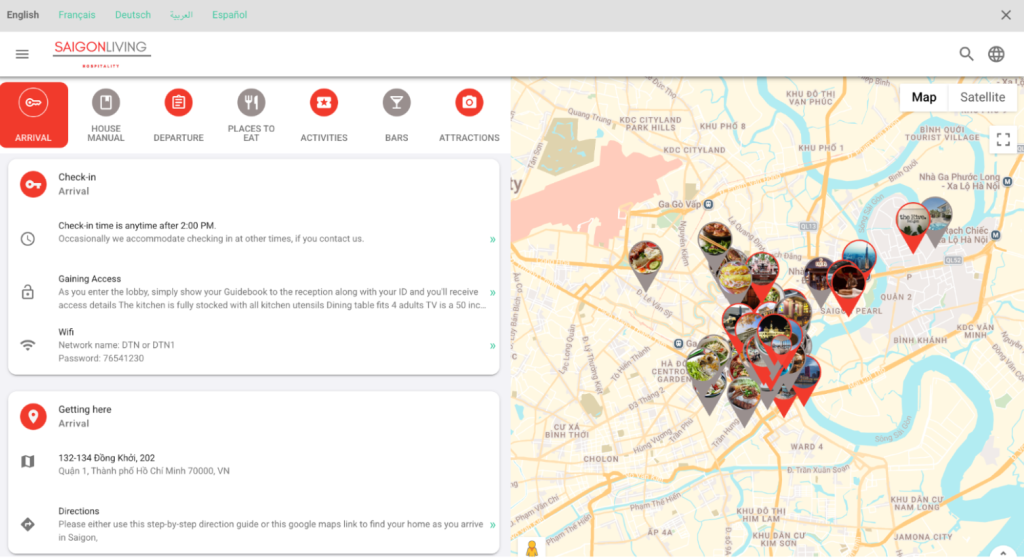
People want to travel. The TSA and search data prove it. But with gas approaching $4 per gallon and consumer confidence at multi-year lows, guests are watching their wallets. This isn’t the moment to raise rates aggressively. It is the moment to hold steady on pricing while adding perceived value: flexible cancellation, welcome baskets, and curated local guides. Hostfully’s Digital Guidebooks are built exactly for this, turning a standard check-in into a premium experience without adding cost.
2. Compressed booking windows demand faster responses
Booking windows have shrunk from 19 days in 2022 to just 15 days in 2026. Last-minute bookings (within 7 days of arrival) now account for 27% of all reservations. If your operations can’t handle a booking that comes in on Tuesday for a Friday check-in, you’re leaving revenue on the table. Automated guest communication, unified inbox management, and pre-built check-in workflows make the difference.
3. Protect your margins
Tariffs are raising supply costs. Gas prices are increasing friction in guest acquisition. Sentiment is dropping. The operators who come through this period strongest will be the ones who tighten their operations now. That means centralizing your tech stack, automating repetitive tasks, and reducing the number of platforms you’re toggling between.
4. Lean into regional strengths
If you operate in the Southeast or Southwest, ride the wave. Demand is there, pricing power is there, and the weather is cooperating. If you’re in the Mountain West or Northeast, focus on shoulder-season packages, mid-week discounts, and experiential marketing that gives travelers a reason to visit before peak summer.
5. Watch the gas price story
The Iran-driven gas price spike isn’t going away overnight. Jet fuel costs are up 70%, and fuel accounts for 35-45% of airline operating costs. Industry analysts expect elevated prices to persist for 6 to 12 months. This will push more travelers toward drive-market destinations and shorter-distance trips. If your property is within a three-hour drive of a major metro, that’s your competitive advantage right now.
Looking ahead: May and the summer horizon
The Hosting Climate Index will publish its May edition in mid-May, capturing April data. Here’s what we’re watching:
Gas prices: Will they stabilize near $4, or push higher toward $4.50? The answer determines whether the summer travel season sees a shift toward budget-friendly, drive-market vacations.
Consumer sentiment: The University of Michigan’s April preliminary reading will signal whether the March drop was a shock reaction or the start of a deeper trend.
Tariff impact: As operators start replacing furnishings and restocking supplies at higher prices, margins will tell the story. Early adopters of operational efficiency tools will separate from the pack.
Summer booking pace: Memorial Day bookings typically start flowing in April. The pace of those early reservations will set the tone for the entire summer season.
Explore the full index
The Hosting Climate Index is updated monthly with fresh data across all seven components and 50+ U.S. cities. Explore the full interactive dashboard, dig into regional breakdowns, and track how your market is performing over time.