

Airbnb is popular with hosts and guests alike for its built-in structure. When things go wrong, the platform doesn’t leave you to figure things out. It sets requirements, mediates disagreements, and manages payouts to prevent minor disagreements from escalating into full-blown disputes.
But when it comes to insurance, expectations often get blurry. Airbnb may offer AirCover automatically with every booking but it has strict rules and limitations.
The main problem is that Airbnb guests don’t always understand what AirCover is for. They often mistake the built-in coverage for comprehensive insurance. For hosts, this confusion sometimes leads to stressful conversations, negative reviews, and demands for refunds.
All these issues can be avoided with a little clarity. In this article, we explain what Airbnb insurance is available for guests and what that means for managing guest expectations.
Why guest insurance matters for hosts
Airbnb insurance for guests may not directly involve hosts but it still impacts you. When something goes wrong, people often mistakenly assume Airbnb will cover it. That belief can affect their experience, influence how they interact with you and your staff, and cause them to lash out at your business.
Damian Zouaoui, co-founder of Oakwell Beer Spa, gives a great example of how a guest responded after a misunderstanding. “Their situation didn’t meet Airbnb’s ‘covered circumstances,’ so they were out of luck. They were furious with us for ‘not honoring insurance,’ even though we had no control over it. That moment made us realize how little some guests understand about what AirCover actually guarantees.”
While hosts have no say in Airbnb insurance policies, you can help them understand what to expect and minimise the risk of issues. You may even be able to save the day and turn a bad experience into their best vacation yet.
What is AirCover for guests?
AirCover for guests is Airbnb’s built-in protection program that automatically applies to every booking made through the platform. But don’t think of it as traditional travel insurance. It’s a set of guarantees that say what Airbnb will do if certain problems occur before or during a stay.
There are four main guarantees:
- Booking protection: If a host cancels close to check-in, Airbnb will help the guest find a similar property or provide a refund.
- Check-in: If a guest can’t access the property at check-in, for whatever reason, Airbnb will step in to assist them.
- Get-what-you-booked: If the listing is significantly different from the listing, Airbnb may offer to relocate a guest or refund them.
- Comfort and safety: Guests can contact Airbnb if the property seems unsanitary or unsafe at any point during their stay.
What AirCover does NOT cover
Airbnb warns users that AirCover isn’t insurance and won’t cover every situation. Here are some of the main exclusions:
- Personal illness and injury that prevent guests from traveling
- Luggage lost or damaged in transit
- Travel delays or disruptions
- Severe weather events such as storms or snow
- Natural disasters like earthquakes
- Minor inconveniences such as malfunctioning appliances
- Guest-initiated cancellations
What happens when a guest files an AirCover claim
Guests must file a claim under AirCover within 72 hours of discovering the issue. They’re encouraged to contact you first to resolve the issue but some may not.
Depending on the situation, Airbnb should notify you and give you the opportunity to respond. They review evidence from both sides, including photos and message histories. The length of the process varies case-by-case but they tend to prioritize cases where safety has become a concern.
Possible outcomes depend on the specific case. If the guest is mistakenly filing an insurance claim for bad weather, Airbnb will simply clarify the platform rules and end the claim. In other cases, they may issue a full or partial refund or move the guest — sometimes at the host’s expense.
Andre Robles of Voyagers Amazon Cruisessays AirCover claims can occasionally cause complications with payments. “Even when the issue was ultimately resolved in our favor,” he says “The operational impact came from frozen funds and extended messaging threads, which consume time and create uncertainty in cash flow planning.”
What is Airbnb travel insurance?
Airbnb travel insurance is optional travel insurance handled through a third-party service rather than the platform itself. The fee is usually between 5-10% of the total booking.
Guests from eligible countries can claim insurance for:
- Cancellations
- Trip interruptions
- Medical emergencies
- Travel delays
- Lost baggage
- Emergency transportation
Eligible guests can usually claim up to 150% of the total they paid if they have to cancel their booking. If you refund a portion under your cancellation policy, they can claim whatever’s leftover.
How travel insurance claims affect hosts
Insurance claims typically only involve Airbnb’s partners and the guests themselves. They shouldn’t need to contact you about reimbursement. If they do, you can remind them that hosts aren’t responsible for insurance and redirect them to Airbnb or the provider.
In most cases, claims shouldn’t affect your payout because the insurer reimburses the guest according to the policy terms.
However, guests may still contact you for help providing evidence such as booking confirmations or proof of payment. Your help may influence whether a claim is approved but you’re not generally part of the approval process and have no control over the final decision.
AirCover vs travel insurance: Key differences
The table below highlights the key differences between the two types of coverage available to Airbnb guests:
| Feature | AirCover | Travel insurance |
| Enrollment | Automatic | Optional |
| Cost | Free | Percentage of the total booking amount |
| Eligibility | All users | US, Canada, UK, the EU, and Australia |
| Scope | Booking issues like host cancellations or unsafe property conditions | Broader travel risks such as guest illness or flight delays |
| Managed by | Airbnb | External insurers |
Common scenarios where Airbnb guests rely on travel insurance
As you never know what’s going to happen, insurance is a good idea for any trip. However, guests are more likely to rely on it in certain situations than others.
- International trips: Long-haul flights and travel visas increase the risk of possible delays.
- Families with young children: Kids can be unpredictable and make it harder to travel, meaning parents are more likely to be delayed.
- Large group bookings: The more people coming to your property, the more likely it is that someone will drop out.
- High cost bookings: Guests may be less able to absorb the cost of luxury properties or long stays if they need to cancel.
- Strict cancellation policies: When refunds are limited, guests will be more inclined to use insurance to protect their payment if something unexpected happens.
Common misunderstandings Airbnb hosts see
Understanding when guests often get confused about Airbnb policies can help you prepare a response and clarify the situation faster.
- Thinking Airbnb functions like an insurance carrier: Robles says many guests overestimate how much AirCover will protect them. “In one case, a guest expected reimbursement for a missed tour due to heavy rain, believing AirCover functioned like travel insurance.”
- Trying to use the host as a go-between: Guests may see hosts as ‘employees’ of the platform and try to file claims through them.
- Treating minor issues as misrepresentation: Airbnb allows for the fact that your property may experience small hiccups like broken toasters or missing remote controls. Guests with especially high standards may try to request a partial refund because of these issues.
- Assuming AirCover overrides cancellation policies: Some guests think AirCover acts as a fallback if they book a property with a strict cancellation policy. They may push for a refund when they realize they still have to pay some or all of the amount.
Other insurance Airbnb guests may use
Some guests come more prepared. They may have other types of insurance in place that may change how they approach disputes and refunds.
- Standalone policies: One-off insurance is popular among travellers because they can tailor it to suit their plans and cover a broad range of possible issues.
- Credit card travel protection: Many premium credit cards include built-in travel coverage for cancellations, delays, or lost baggage, which guests may use instead of purchasing separate insurance.
- Annual travel plans: Frequent travellers may hold year-round policies that automatically cover multiple trips within a 12-month period.
As before, guests may approach you to ask for evidence to support their insurance claims. Help them as much as possible but remember that you’re not required to do anything provided you’ve complied with Airbnb’s policies.
How hosts can reduce the risk of coverage confusion
Although you cannot control how guests book or whether they purchase insurance, you can minimize the risk of confusion. Below we will look at the ways you can avoid misunderstandings and disputes with guests about insurance-related issues:
Get crystal-clear with your property descriptions
Describe your property as clearly as possible in your listing to avoid any chance of any dispute due to misrepresentation. Even if Airbnb takes your side, you’ll still have annoyed guests to deal with.
That means not giving into the temptation to exaggerate features or oversell the experience to secure bookings. For example, don’t describe an Airbnb as “on the beach” unless it’s actually on the seafront. Also, constantly update your amenities and take any features off as soon as they become available, even if it’s only temporary.
Make cancellation policies clear and consistent
Remind guests about your cancellation policy in all your pre-arrival messaging. It’s better for them to cancel just before the refund window closes than start arguments with you or file a complaint with Airbnb.
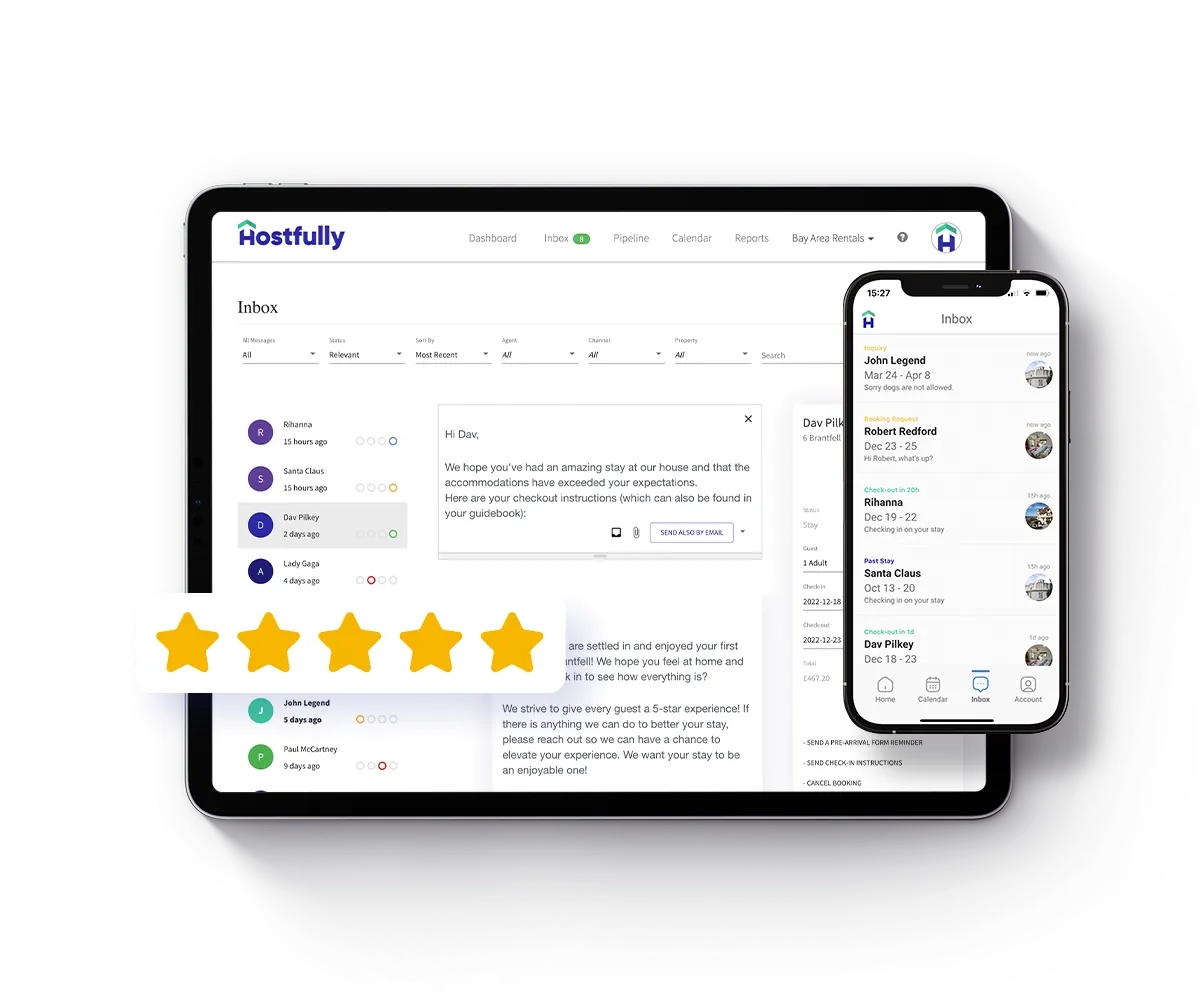
Property Management Software (PMS) like Hostfully schedules these messages so you don’t forget to send them. Our task automation feature enables you to create templates with empty fields and write them in your brand voice. Then you can set triggers in the booking process to populate these messages with the guest details and send them.
Use digital guidebooks to clarify
Guidebooks give you an opportunity to set expectations early. Alongside arrival details and house rules, you can include a brief section clarifying Airbnb policies, cancellation terms, and when guests may want to consider travel insurance.
Think about creating a digital guidebook with a platform like Hostfully to send to guests via SMS. Our platform lets you customize them with text, images, video, GIFs, and maps. Guests can access them whenever they want before and during their stay so they can quickly refer to your policies.
Caption: Hostfully’s digital guidebooks let you remind guests about Airbnb policies and provide helpful recommendations about insurance.
Encourage guests to reach out to you first
Ask guests to contact you before they reach out to Airbnb. It’s not only platform policy but it also gives you more control over the situation and prevents issues from escalating.
Zouaoui says he’s proactive about opening this line of communication. “We send a friendly note saying, “Let us know right away if anything’s off so we can make it right.” That small message does two things: it sets the expectation that we’re reachable, and it softens the urge to go straight to Airbnb. Once someone starts a claim, it gets harder to resolve things person-to-person.”
Stay in control when claims arise with Hostfully
Airbnb insurance claims don’t have to directly involve you to impact your short-term rental business. If they affect the guest experience, they can influence whether people want to give you a good review or come back to your property.
Hostfully PMS can help clarify expectations with guests, provide a smoother experience, and make it easier to resolve occasional issues. Our software gives you access to:
- Unified inbox to keep all guest communication on-platform
- Automated messaging to reinforce cancellation policies and check-in instructions
- Digital guidebooks to prevent access-related complaints
- Smart lock integrations with entry logs for added documentation
- Task and cleaning management to verify property condition
- Channel management to keep listings accurate and up to date
Insurance confusion becomes easier to manage with the right systems behind you — and you stay focused on delivering consistent, high-quality stays.

FAQs about Airbnb insurance for guests
Is Airbnb insurance automatic for guests?
This depends on the type of insurance. AirCover automatically applies to every booking made through the platform with no extra steps required. On the other hand, guests must select Airbnb travel insurance and pay for it at checkout.
Does AirCover replace travel insurance?
No, AirCover is meant to cover booking-related issues such as major misrepresentation or access problems. It doesn’t cover illness, flight cancellations, or broader travel disruptions like full travel insurance does.
Who pays if a guest cancels for personal reasons?
Refunds largely depend on your host cancellation policy and the guest’s insurance. If they cancel outside the refund window, guests must still pay the outstanding amount unless they have Airbnb travel insurance or a standalone policy.
Can an AirCover claim affect my payout?
Yes, if Airbnb decides that your listing didn’t meet its standards or policies, it may ask you to refund the guest or cover the cost of relocation. You may also experience delays with transfers while they decide what action to take.