

Airbnb requires people to be at least 18 years old to create an account and make a booking. Sounds straightforward enough, right?
In practice, Airbnb age requirements can cause issues for both hosts and guests. The rule affects who the platform holds responsible for a stay, when bookings get blocked, and whether you remain protected if something goes wrong.
Managing the age requirement becomes more complex once you factor in location and local laws. Many places apply their own restrictions or expect hosts to take extra steps to verify guests.
But all you need to do is take a second to get familiar with the rules. Our guide does the hard work for you by breaking down how Airbnb’s age policy actually works, where exceptions apply, and what you can do to manage risk with confidence.
Airbnb minimum age requirement: The rules explained
In short, Airbnb policy says that you must be at least 18 years old to create an account and make a booking.
There’s a good reason for this rule. Airbnb places responsibility for the stay on the account holder, not on every individual guest included in the reservation. The person in question must be an adult to assume that responsibility.
If guests damage your property or break house rules, for example, Airbnb treats the account holder as the liable party. It doesn’t matter if another member of the group actually caused the issue.
Other guests can be underage, provided the account holder is over 18 and remains responsible for the stay. This rule means that families can still travel with their children, but groups of teens can’t book accommodation without an adult supervising them.
Airbnb age rules for guests and additional occupants
Airbnb requires the account holder to verify their age and identity as part of the sign-up process. This typically involves submitting a government-issued ID like a passport or driver’s license.
If the account holder doesn’t check into the property, Airbnb can intervene. They may attempt to contact them to understand what’s happened in case there was a mistake or a problem. In many cases, the platform will cancel the booking without issuing guests a refund.
But that’s where Airbnb’s responsibility ends. Hosts must ask other guests to verify their age if they want this extra reassurance, or if it’s required by local laws.
Benefits and limitations of Airbnb’s age requirement policy
Airbnb’s age requirements actually come with many benefits for hosts. It’s just important to be equally aware of the downsides to having this policy in place.
Benefits
- Ties each booking to one responsible adult
- Reduces anonymous and high-risk bookings
- Aligns with global industry standards
- Splits the responsibility for management with the platform
Limitations
- Age doesn’t reliably predict behavior
- Unnecessarily blocks some younger guests
- Potential confusion for Airbnb users
- Extra rules to account for in processes
Consequences of breaking Airbnb’s age policy
If hosts knowingly allow guests to break the age requirement policy, they can face a range of consequences:
- Cancellations: Airbnb may cancel the booking once it becomes aware of the violation, leaving you with a last-minute gap in your calendar.
- Loss of protection: If something goes wrong during the booking, Airbnb may refuse to cover damage and liability claims.
- Account suspension: Repeat violations may lead Airbnb to temporarily block your account.
- Weaker position in disputes: Airbnb may be less likely to back you in conflicts with guests when they know you’ve ignored policy.
Why Airbnb introduced age restrictions
Airbnb’s age controls didn’t come out of nowhere. Over the years, the platform has faced mounting pressure from hosts, neighbours, and local authorities over incidents involving groups of teens. While some minors can behave responsibly, many damage rentals, leave properties unsecured, or throw loud parties without the right supervision.
Plus, many countries already set their own age requirements. Airbnb generally sets policies that are consistent with international and local laws and cooperates with enforcers.
Can Airbnb hosts set their own age restrictions?
No, Airbnb hosts generally can’t raise the age limit for guests. If you host Airbnb experiences, you can set a higher threshold for certain services to 21 years old.
Additionally, Airbnb requires you to mention your age limit for these services in your listing and apply it before you confirm a booking. You can’t accept a reservation and reveal your policy afterward.
Note that you strictly can’t use age requirements to discriminate between guests. If you only accept over-20s for experiences, you can’t make exceptions for specific groups. Similarly, you can’t set upper age limits for senior guests or ban children altogether from your properties.
That doesn’t mean Airbnb hosts are powerless. You can explicitly state whether your rental is suitable for young children and indicate the target audience through your listing description, headings, and photographs. House rules can also suggest to guests whether your property is the right fit for their age group.
How hosts can manage Airbnb age requirements and protect their business
Airbnb’s age rules set a baseline, but they work best alongside practical safeguards. Here’s what you can do to reduce risk and minimize fallout should something go wrong at your property:
Use guest screening tools
Guest screening tools assess each booking before you confirm. They automatically evaluate booking behavior, account history, and other risk signals to indicate whether someone is likely to cause a problem.
Screening gives you an early opportunity to review or decline bookings before you share access details. While tools can’t guarantee good behavior, they reduce reliance on guesswork and reveal potential issues earlier in the process.
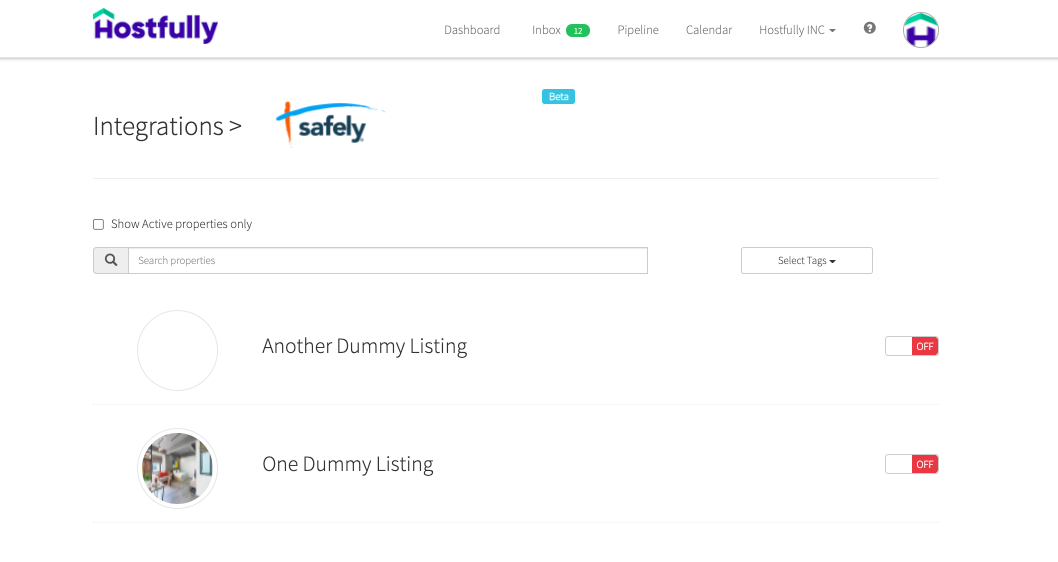
Leading guest screening tools integrate with Property Management Software (PMS) like Hostfully. This enables you to share guest details and automate more of the reservation process, ensuring bookings go smoothly.
Request guest ID
Verifying guest identity upon arrival is common practice in many countries and cities. In some cases, it’s also a local requirement for any businesses offering tourist accommodation.
Checking IDs upon arrival gives you an opportunity to check that the account holder is present at the property. This is especially useful for preventing third-party bookings or situations where an adult reserves on behalf of underage guests. Having verified identification also puts you in a stronger position if a dispute, cancellation, or damage claim arises later.
Invest in smart devices
If you manage Airbnbs from afar, you can’t verify guests’ identity on arrival. You have to trust that the account holder hasn’t booked on someone else’s behalf.
However, you can use smart devices to monitor your property. Most local laws allow you to install CCTV cameras outside your property to watch the entrance and smart locks to keep a record of when people come and go. Plus, you can use noise monitors to check whether a group is throwing a raucous party.
Hostfully PMS now integrates with over 200 smart devices, so you can manage all equipment from one dashboard. That’s everything from locks and cameras to WiFi, lights, and switches.
Maintain consistent communication
Guests may not plan to leave minors unaccompanied on the property overnight. They may have an emergency back home and decide to leave their teenage children behind to enjoy the rest of their stay. While understandable, this situation isn’t permitted under Airbnb’s policy.
Checking in midway through the stay can encourage guests to open up to you if there’s an issue. You can help them find another solution or see that they have to take their teenage children with them when they leave.
Use task automation to schedule these messages to guests. Hostfully PMS enables you to create templates and automatically fill them with each booking party’s details for a more personal effect.
Set clear, enforceable house rules
House rules help you set expectations before guests arrive and reduce ambiguity during the stay. They can clarify that you uphold Airbnb’s age limits and that you only allow minors to stay at your property when occupied by an adult.
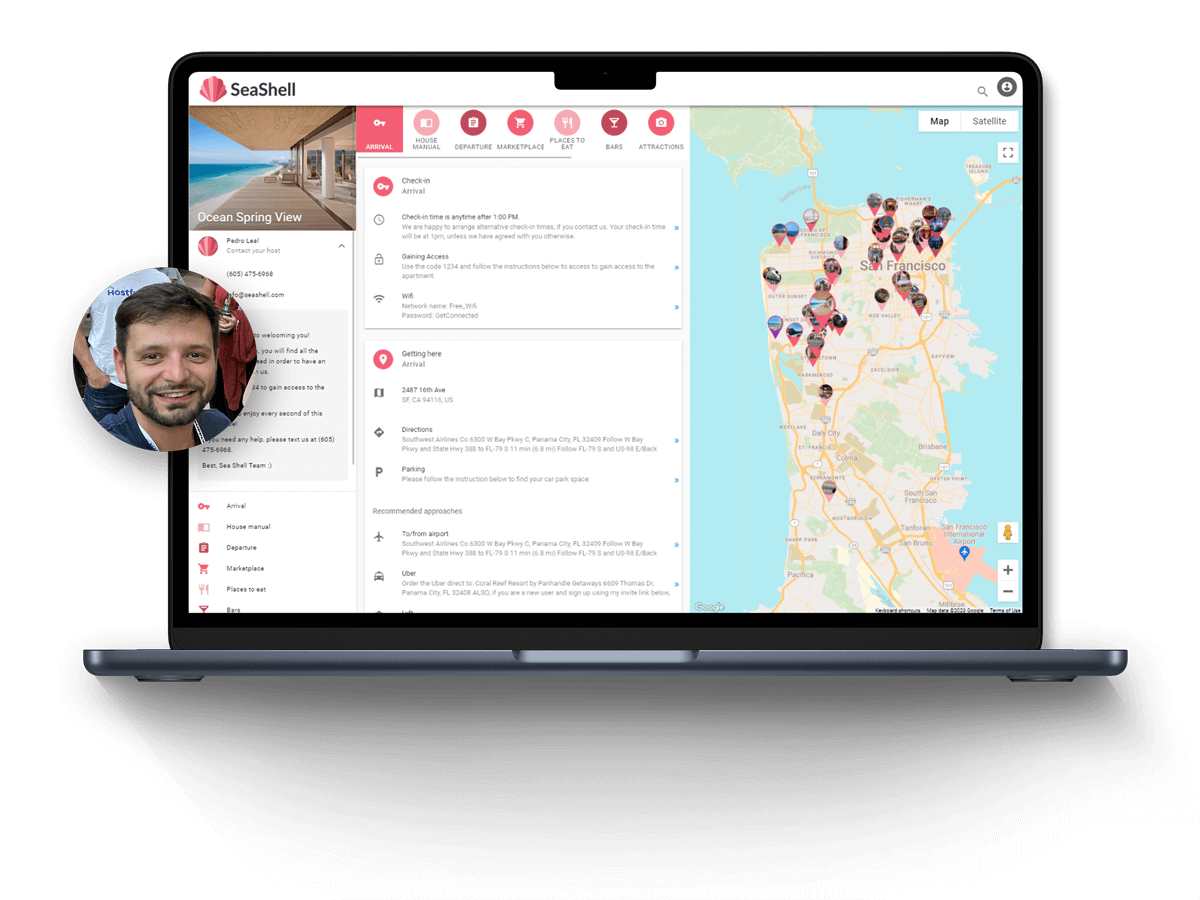
Digital guidebooks, like the one Hostfully provides, allow you to present your house rules to guests. You can list your rules clearly, explain why age limits are in place, and state any consequences for violations. Guests can access these guidebooks before arrival and refer back to them during their stay, meaning they’re more likely to understand and follow your rules.
Managing Airbnb age requirements with Hostfully
Understanding Airbnb’s age requirements helps you protect your property and set clear expectations with guests. But while the platform’s rules set a useful baseline, you still need practical systems in place to manage risk and stay compliant.
Hostfully PMS brings your guest communication, rules, and operational workflows into one place, making it easier to enforce policies across every booking.
- PMS integrations that support screening and verification workflows
- Centralized digital guidebooks to clearly communicate house rules and expectations
- Automated guest messaging to reinforce requirements before arrival
- Tools to manage listings consistently across multiple booking platforms
- Smart devices to monitor your properties compliantly from afar
When you have the right policies and tools working together, age requirements become less of a hurdle and more of a framework for responsible hosting.

Airbnb age requirement FAQs
Can a guest still stay at an Airbnb if they’re not 18?
Yes, Airbnb’s minimum age requirement applies only to the person making the booking. Minors can stay at a rental as part of a family or group, as long as the account holder is over 18 and remains at the property for the entire stay.
What are the options if a guest doesn’t meet Airbnb’s age requirements?
If your guests can’t book your property through Airbnb due to age restrictions, they may be able to use other listing sites with different policies. Alternatively, they can make a reservation through your direct booking site.