

A guest slips on a wet deck after a rainstorm. Someone scalds their hand on a malfunctioning coffee maker. Water from an overflowing bathtub leaks into the unit below and damages your neighbor’s apartment…
Yes, even the most carefully managed short-term rentals carry risk. You can maintain the property and screen guests thoroughly but still face situations that are completely outside your control.
That’s why every host needs short-term rental liability insurance. This coverage protects you from financial loss if guests make injury or loss claims connected to your properties. As legal costs can quickly add up, having the right policy in place could literally save your business.
Let’s unpack short-term rental liability insurance in this article. We’ll look at what it covers, the different types you should know about, and how to arrange a policy.
What is short-term rental liability insurance?
Short-term rental liability insurance protects you if a guest or third party claims they were injured or suffered a loss because of your property. If someone files a lawsuit over unsafe conditions, this coverage helps pay for medical expenses, legal defense, and potential settlements.
Unlike standard homeowners policies, liability insurance for short-term rentals is designed for commercial activity. It guarantees protection no matter who’s staying at your properties.
As Silvia Lupone, owner of Stingray Villa, explains, “The typical homeowners’ insurance policy exists to protect your household members rather than to cover people who use your property for paid services. In the insurance world, once the second payment is made, you are a business. A policy that fails to include “short-term rental” as a specific covered activity leaves your organization without proper protection.”
What does short-term rental liability insurance cover?
Coverage varies by provider, but most short-term rental liability policies protect hosts across a range of scenarios:
- Guest injuries on your property
- Accidents caused by unsafe conditions
- Damage to neighboring properties
- Incidents involving other visitors or service providers
- Financial losses due to an injury
- Legal defense costs
Note that liability policies don’t protect you against guest damages or loss of income — you need separate vacation rental insurance for that.
What are the different types of liability coverage for short-term rental hosts?
There are several different types of liability coverage. Many hosts mix and match them depending on their property type, amenities, and booking channels.
General liability
This type of liability is the foundation of most short-term rental insurance policies. It covers basic scenarios such as bodily injury and property damage tied to your business operations.
Many hosts are likely to find general liability insurance to be sufficient. If you have a property with features like pools or waterfront access, however, you may find this leaves gaps in your coverage.
Premises liability
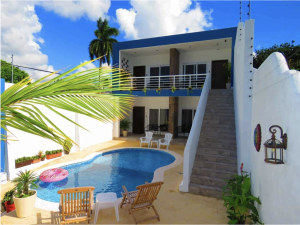
Premises liability focuses specifically on injuries caused by unsafe property conditions. This includes hazards like broken stairs, loose flooring, and poor lighting.
Although often bundled within general liability policies, it’s related directly to the physical condition of your home. It’s especially important for rentals with pools, decks, or multiple levels.
Platform liability
Some booking platforms provide limited liability protection. For example, Airbnb offers AirCover with coverage of up to $1 million per occurrence.
Antonella D’Angelo, CEO of NCG Experience, says that these policies have clear limitations. “It’s not always a traditional insurance policy and can be discretionary with conditions,” she says “We treat platform coverage as a backstop, not a primary risk strategy.”
Umbrella liability
Umbrella liability provides additional coverage once you hit your primary policy limits. If a severe injury or loss exceeds your $1 million base coverage, for example, it can add another $1-5 million in protection. This type of coverage is particularly useful for hosts managing high-value properties or large portfolios.
Optional risk liability
Some businesses need extra policies to cover specific scenarios like:
- Events management
- Liquor sales
- Pet-friendly policies
- Pool or hot tubs
- On-site staff
Most vacation rental companies don’t need extra policies. They only become important when your property goes beyond standard hosting by allowing gatherings or hosting events. As a general rule, the more amenities, guests, or services you offer, the more complex your risk profile becomes.
Why short-term rental hosts need liability insurance
Even the most careful guests can’t eliminate risk entirely. You need liability insurance to protect your business from financial losses when something unexpected happens.
Having the right policy in place helps you:
- Keep your personal and professional assets safe from lawsuits
- Cover high legal defense costs
- Satisfy the requirements of mortgage lenders
- Protect you when accepting direct bookings
- Demonstrate professionalism and compliance
Rami Sneineh, owner of Insurance Navy Brokers, says that a single serious claim could end your entire business. He says, “As it has been my experience, waiting until you get into an accident before getting the proper insurance is a formula to losing your home.”
How much short-term rental liability insurance do you need?
Most short-term rental hosts carry at least $1 million per occurrence in liability coverage. For many businesses, this serves as a practical minimum.
As for how much you should be paying, the amount depends heavily on your context. Lupone says she’s noticed that the annual cost ranges from $1,500 to $3,500 in 2026 for standard homes. However, larger properties can incur much higher rates.
D’Angelo agrees and estimates that she pays around $8,000 per year to cover her luxury villas. She says the total depends on a number of factors, including annual revenue, portfolio size, and prior claims history.
How to get short-term rental liability insurance
Getting the right coverage requires a little research and reflection, but doesn’t have to be complicated. Here are some steps you can take to arrange liability insurance:
1. Audit your rental activity
Before you talk to insurance providers, review how your business runs. You should consider the following factors:
- Which booking platforms you use
- Whether you accept direct bookings
- Your occupancy levels
- Amenities and guest capacity
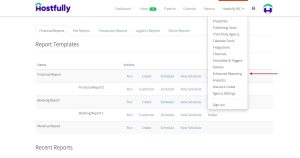
Do you use a Property Management System (PMS) like Hostfully? You can generate detailed reports to understand how your business is operating. This helps make sure you disclose accurate information to insurers and avoid coverage gaps.
2. Choose specialist insurers
Avoid relying on standard policies that might leave gaps in your coverage. Instead, look for providers that specialize in short-term rentals and explicitly cover commercial hosting activity.
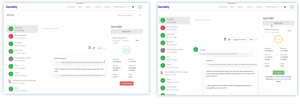
Hostfully makes it easier to find insurance providers and align them with your business. Our platform integrates with leading solutions such as Enso Connect, InsuraGuest, and Safely, and we’re always adding more to our marketplace.
3. Compare coverage structure
Look beyond the annual cost of liability insurance to understand whether you’re both fully covered and getting the best deal from your provider. Here’s what to compare:
-
- Limits per occurrence: The maximum an insurer will pay for a single claim.
- Annual aggregate limits: The total an insurer will pay across all claims in a single year.
- Deductibles: The amount you must pay before your liability insurance kicks in.
- Exclusions: Anything not covered by your policy.
Lupone recommends paying close attention to exclusions. She says, “Start by examining your complete exclusions list, which runs from beginning to end. Do not look at what is covered; look at what is not covered.”
4. Set limits based on your worst-case scenario
When deciding on liability limits, base your coverage on what’s possible rather than what’s typical. Most claims may be minor but liability insurance is there to take care of catastrophic situations.
Evaluate your risk profile by asking yourself the following questions:
- How might my services and amenities change my risk profile?
- Could a serious incident at your property exceed your per-occurrence limit?
- Could multiple claims in one year potentially exhaust your aggregate limit?
- If coverage fell short, how would the remaining exposure impact your business assets?
You may be reluctant to pay the extra. However, multiple layers of insurance often provide meaningful peace of mind relative to their cost.
Common pitfalls with short-term rental liability insurance
Many hosts find claims get denied because of small, easily avoidable mistakes rather than a complete lack of coverage. Here are some of the most common pitfalls:
- Sticking with standard plans: Sneineh says, “The most common assumption of most homeowners is that their standard plan will cover a guest injury and my practice indicates that such personal policies tend to turn down any commercial claim instantly.”
- Relying solely on AirCover vs standalone insurance: Platform coverage only applies to reservations made through the site and it’s often limited. It won’t protect you from every scenario or cover direct bookings.
- Failing to update coverage as your business grows: Adding properties, increasing occupancy, or launching new services affects your risk profile. Review your coverage annually to make sure you’re still protected.
- Assuming defence costs are unlimited: Some policies limit coverage for legal bills. Confirm how your policies are structured before purchasing them.
- Only considering the price: Sneineh says that chasing cheap insurance can leave you open to more risk. “A ten-thousand-dollar deductible policy is practically no insurance,” he says “You may get twenty dollars each month now, but you will make it up when some guest slips in the shower. This is why we concentrate on locating the plans, which will lead to a balance between the low premiums, as well as affordable out-of-pocket expenses in case of any incident.
- Not documenting incidents: Missing photos or message histories can weaken your claim. You should use a PMS like Hostfully to upload photos of properties before and after each stay and keep a running record of all guest communication.
Protect your short-term rental business from anything with Hostfully PMS
Short-term rental liability insurance keeps your business running when something goes wrong. The key is making sure your policy reflects how you actually operate — especially if you accept direct bookings or manage multiple properties.
Hostfully PMS can support you no matter your setup. Beyond powering your daily operations, our platform gives you the structure and visibility you need to manage risk more effectively.
With Hostfully, you can:
- Centralize bookings across channels to understand your exposure
- Integrate with insurance-focused partners to reduce high-risk stays
- Share digital guidebooks with rules and safety instructions to minimize incidents
- Store and retrieve guest communication to support documentation during claims
When you take a proactive approach to liability, you can stop obsessing over the worst-case scenario and focus on growing your business.

FAQs about short-term rental liability insurance
How much liability insurance do I need for my vacation rental?
Most short-term rental hosts carry a minimum of $1 million per occurrence in liability coverage. Bear in mind that’s considered the baseline — you may need higher limits if you operate a luxury property, host large groups, or offer amenities like pools and hot tubs.
Does Airbnb’s AirCover provide enough liability protection?
Airbnb’s AirCover includes up to $1 million in host liability protection, but only applies to bookings made through the platform. It also comes with a range of conditions and exclusions. Most hosts treat it as supplemental coverage rather than a replacement for standalone liability insurance.