

Vacation rental businesses involve a lot of moving parts. You oversee multiple properties, work with different owners, and handle a steady flow of guests.
This setup can turn property management insurance into a challenge. Instead of having one policy covering everything, protection is scattered across owners, properties, and locations. It’s easy to lose track of what’s covered and what’s not.
And when you lose visibility, insurance gaps start to appear. Claims get denied, the costs add up, and owners question whether you’re the right business to manage their property.
Read our article to understand how to avoid these gaps in coverage. We explain the different types of property management insurance you need for vacation rentals, how they all fit together, and how to coordinate policies across portfolios of any size.
What is property management insurance for vacation rentals?
Property management insurance for vacation rentals is the coverage you get to protect your company. It covers you against the risks typically associated with short stays like damage, liability claims, and loss of income.
Unlike some policies, property management company insurance protects your business operations as well as your rentals. Coverage is spread everywhere you operate. That means you can claim for issues like damage caused during maintenance, employees getting injured on-site, or booking issues that lead to financial claims.
Some hosts mistakenly think that standard landlord or homeowner insurance policies will cover their business. Rami Sneineh, owner of Insurance Navy Brokers, says this can have disastrous consequences:
“I’ve seen one slip and fall claim put a small management firm out of business,” he says, “We had one case in our past involving a guest who sustained an alleged permanent back injury from a loose carpet on a stair and went out to file a monstrous lawsuit. From what I’ve seen, you never know your limits are too low until a lawyer comes with a million dollar demand letter.”
Types of property management insurance for vacation rentals
So what insurance do you need in place to cover your vacation rental company? Here’s a list of the most common types of policy and what they cover.
General liability insurance
General liability insurance offers protection if third parties make claims against your business. That doesn’t necessarily have to be guests. It could be anyone entering or working on your property including:
- Invitees of guests
- Employees
- Contractors
- Neighbors and nearby residents
- Passersby
- Utility workers
- Local authorities
If a delivery person slips and falls on your premises, for example, they might have grounds to file a lawsuit. In which case, general liability insurance would cover you.
Errors and omissions (E&O) insurance
Similar to general liability, E&O insurance protects you against legal claims that arise from professional mistakes. That might be double bookings, misleading listings, or unclean properties.
E&O is often a legal requirement so it’s important to check with your local authorities to see whether you need to secure coverage before you start accepting guests.
Workers’ compensation
Most regions have their own version of workers’ comp. You’re usually required to enroll in plans from the moment you hire your first employee or if you reach a specific business size.
Workers’ comp covers anybody on your payroll including cleaners, maintenance teams, and on-site managers. It doesn’t usually apply to contractors. But be careful — you must classify workers correctly and check whether they qualify for this protection or you could receive hefty penalties.
Commercial property insurance
This type of insurance covers any physical assets owned by your business. Depending on your operations, that might include:
- Office equipment
- Check-in devices
- Lockboxes
- Cleaning and maintenance equipment
- Laundry machines
- Cleaning supplies
- Guest supplies like towels and linens
Commercial umbrella insurance
Commercial umbrella insurance provides additional liability coverage beyond your existing policies. It kicks in when claims exceed general liability limits or you receive multiple claims in the space of a year. Although anybody can benefit from this type of insurance, it’s especially useful for those managing large or high-value portfolios.
Why property managers shouldn’t rely on owners to manage insurance
The property owners you work with should get their own insurance. But you shouldn’t assume these policies will protect your business and here’s why:
- Misaligned priorities: Owners usually get insurance designed for their property, not your business.
- Coverage gaps: When incidents involve both the property and your company, it’s not always clear who’s ultimately responsible.
- Inconsistent standards: Each owner may choose different limits, exclusions, and providers, leading to uneven protection.
- Lack of PMC inclusion: Unless your business is listed as an additional insured, you may not be covered when a claim involves your role as the manager.
- Unreliable partners: Owners may allow their insurance to lapse without telling you, leaving you completely open to risk.
How much does property management insurance for vacation rentals cost?
The answer is simply that it depends. Insurance costs vary widely based on factors like your location, portfolio size, and local regulations.
You may think the biggest factor is your number of properties. While costs scale as your portfolio grows, the complexity of your operations has more of an impact. Adding properties in popular locations or with high-risk features can raise premiums faster than you might expect.
That’s why it’s best to tailor your insurance costs to your business setup. You can still use similar companies in the area as a benchmark but you shouldn’t use them to decide what to spend.
Stan Ingram, owner of Gulf Style Rentals, also says to play it safe. “In general we take the approach that it’s better to have more than you need,” he says, “And thus far we haven’t had any incident where we needed to add insurance.”

How to choose the right insurance for your vacation rental company
Choosing the right vacation rental property management insurance is all about making sure your protection matches how your business actually operates. Here is a list of steps to help you make the best decision:
- Check your existing coverage: Understand what owner policies and platform programs already protect you against.
- Assess your risk profile: Look beyond the properties themselves and consider how your operations create risk.
- Look for specialists: Only include providers that work in the vacation rental space in your shortlist to make sure they’re familiar with your operations.
- Read reviews: Ask for client testimonials and search for the insurer online to see what kind of experience other vacation rental companies have had.
- Understand exclusions and limits: Look at contracts before you commit to check the coverage matches your portfolio size and there aren’t any gaps.
- Get familiar with the claims process: Learn how your insurer handles claims to see how easily you can resolve issues like damages and lawsuits.
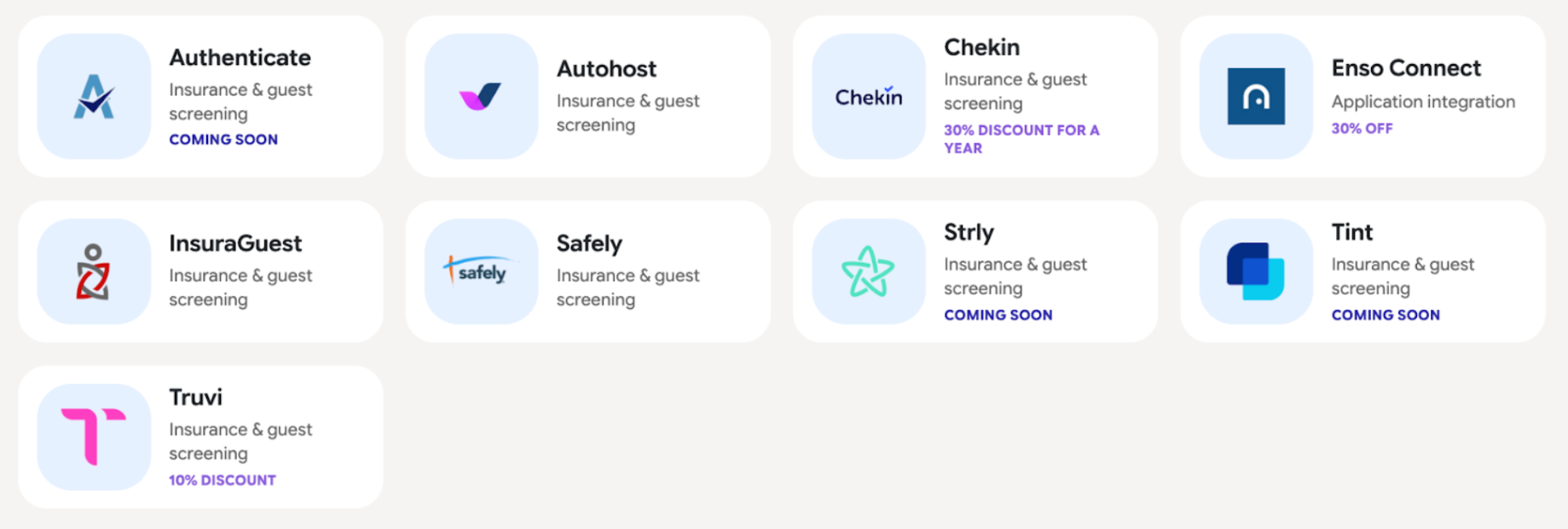
Unsure where to start? Hostfully partners with a range of trusted insurance providers that specialize in short-term rentals.
How to coordinate insurance across vacation rentals
As your portfolio grows, the biggest challenge is keeping coverage consistent. Each new property, location, and partnership opens you up to additional risks.
Below are some tips on how to coordinate insurance effectively:
Align owner insurance with your operating standards
Set clear insurance requirements for every property you manage. This should include the types of insurance, minimum coverage limits, and proof that policies are active and up to date.
Ingram suggests making requirements a condition of partnering with your business. “Per our management agreement,” he says, “Owners are contractually obligated to hold homeowners insurance fit for short-term rentals with minimum-defined coverage limits.” Making insurance a part of your contract shows owners that you’re serious about policies and offers you some recourse if they violate the agreement.
Define responsibilities across properties
Make it clear who is responsible for what and when each policy applies. Without boundaries, your company may end up on the hook for legal claims that weren’t your fault.
Liability is a good example of when the lines can get blurred. Who exactly is to blame if a guest trips over a loose piece of flooring? It could be the owner if they were aware of the issue and failed to act, or your company if they’ve taken responsibility for maintenance.
Andrew Hanson, Co-Founder of Pond Life Vacation Rentals, recommends clarifying this in your owner agreement. He says, “By incorporating specific “special assessment” clauses and protective management language into our agreements, we stay ahead of the unique risks inherent in short-term rentals.”
Maintain visibility across policies and properties
Tracking insurance is challenging when you have a large portfolio. You need a centralized way to monitor policies, limits, and renewal dates across all the properties you oversee.
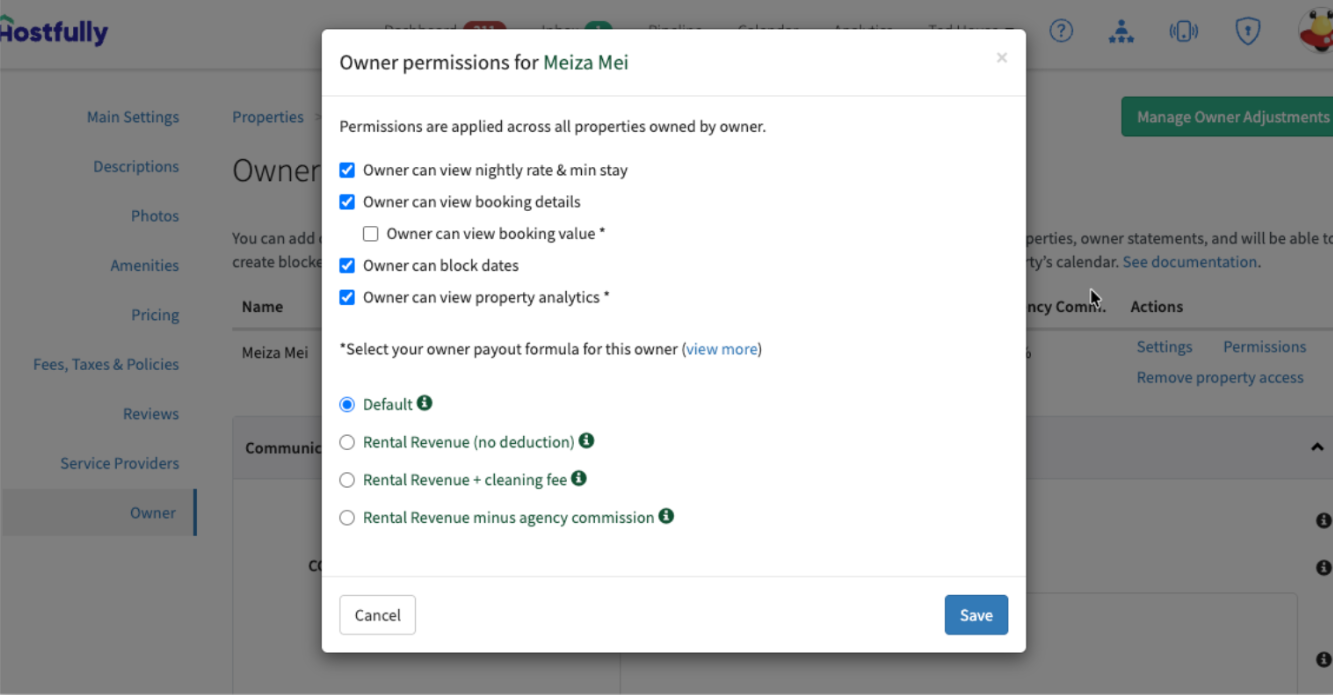
Sneineh suggests investing in a specialist solution. “We are using digital portals where owners will be required to upload their most recent proof of insurance before we release their monthly payouts. This results in a fine paper trail which insures our firm against disaster ever befalling one of their units.”
Property Management Software (PMS) like Hostfully helps you to monitor insurance. Our platform consolidates all your property, booking, and operational data, so you can quickly check details relevant to policies and claims. We also have an owner portal to make it easier to update everyone you’re working with.
Apply protection consistently across bookings
Make sure every booking has the same baseline level of protection, regardless of the owner or property. You may have some inconsistencies due to individual policies or local regulations, but you should still meet set standards everywhere you operate. That means deciding what types of property management insurance you can’t go without and what limits to have in place.
Standardizing insurance also helps you avoid confusion. When you have different policies for all your properties, it’s harder to tell when there are gaps.
Prepare for claims across multiple stakeholders
Incidents usually involve several parties. When you file a claim with an insurer, for example, you might need evidence of damages from both the owner and the cleaning team.
Claims can stall quickly without a clear process. Delays in reporting, missing documentation, and unclear responsibilities can all slow you down. In a worst case scenario, they might mean your claim gets denied.
PMS like Hostfully can help keep everyone on the same page. Our solution enables you to assign tasks, share reports, and message with key stakeholders wherever they are. We also integrate with top turnover management solutions, so you can receive photos of damages to file claims immediately.
Bring structure and visibility to your insurance strategy with Hostfully
Managing insurance across multiple properties is less about choosing the right policy and more about coordinating coverage across your entire operation. When responsibilities are clear and protection is consistent, you bring your overall risk right down.
Hostfully can help you coordinate even the most complex operations by giving you more visibility into bookings, guest stays, and operational workflows.
- Centralized calendar and booking management across all channels
- Automated guest screening to reduce high-risk reservations
- Unified inbox for fast, trackable communication with guests
- Digital guidebooks to set clear expectations and reduce incidents
- Task management for cleaning, maintenance, and turnovers
- Integration marketplace for insurance and protection partners
Hostfully means you can scale confidently, knowing your coverage and operations will stay aligned as you expand.

FAQs about property management insurance for vacation rentals
What’s the difference between PMC insurance and property owner insurance?
Property owner insurance covers the physical building and its contents, while PMC insurance protects your business operations. That includes liability, staff, and service-related risks. You need both types of insurance to protect your business, as gaps often appear when one is expected to cover the other.
Does platform protection like AirCover cover property managers?
Platforms like Airbnb and Vrbo cover certain guest-related incidents, but they’re limited in scope and come with strict terms and conditions. It’s best to treat them as an extra layer of insurance, rather than your primary policy.
How do I get listed as additional insured on owner policies?
You can request to be added to policies when you onboard owners or include it as a requirement in your management agreement. Insurers can make the necessary changes to the contract to extend the coverage to your vacation rental business.